Understanding the oppressed meaning is important in 2026 because the word appears not only in books and news but also in social media discussions, TikTok debates, gaming chats, and online activism conversations.
Many people search this term because they see it used in emotional posts or political discussions and feel unsure about what it truly means in context.
This guide breaks it down in the simplest way possible so you can understand it instantly and use it correctly in real conversations without confusion.
What Does “Oppressed” Mean in Chat or Text?
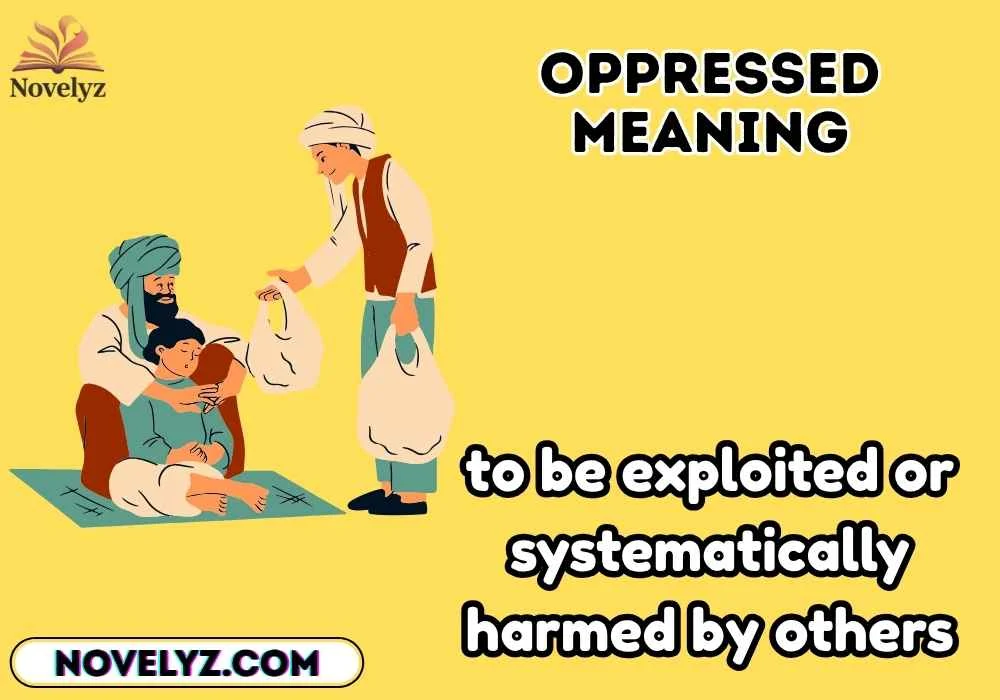
The oppressed meaning in simple terms refers to a person or group being treated unfairly, controlled, or denied basic rights, freedom, or opportunities by others in power.
In online conversations, the word is often used to describe:
- Social injustice or inequality
- People facing discrimination
- Groups being controlled or silenced
- Emotional or mental pressure caused by systems or situations
Basic Definition
Oppressed = being treated unfairly or kept down by authority, society, or systems
How the Meaning Changes in Context
Depending on where you see it, “oppressed” can mean:
- Serious real-world issue: discrimination or injustice
- Emotional expression: feeling controlled or stuck
- Internet exaggeration (casual tone): joking about life struggles
Over time, social media has made the word more common in everyday emotional expression, even in light or sarcastic situations.
How People Use “Oppressed” in Real Conversations
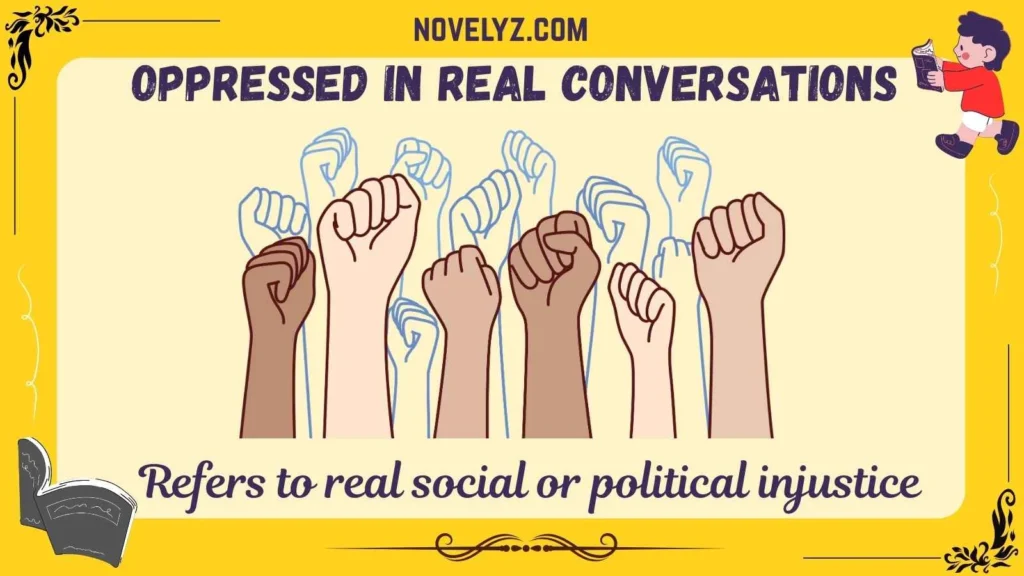
You’ll see the word “oppressed” across many digital platforms where people express opinions, emotions, or humor.
Common platforms:
- Text messages
- Instagram captions and comments
- TikTok discussions and memes
- Discord servers
- Reddit threads
- Gaming chats
- Dating app conversations (rare, but possible in serious talk)
Tone differences:
- Serious tone: talking about injustice or real struggles
- Emotional tone: describing feeling controlled or overwhelmed
- Sarcastic tone: joking about small daily problems
- Political tone: discussing systems, rights, or society
In Gen Z and Millennial culture, the word is sometimes used humorously, but the core meaning still remains serious.
Real-Life Examples of “Oppressed” in Text Messages
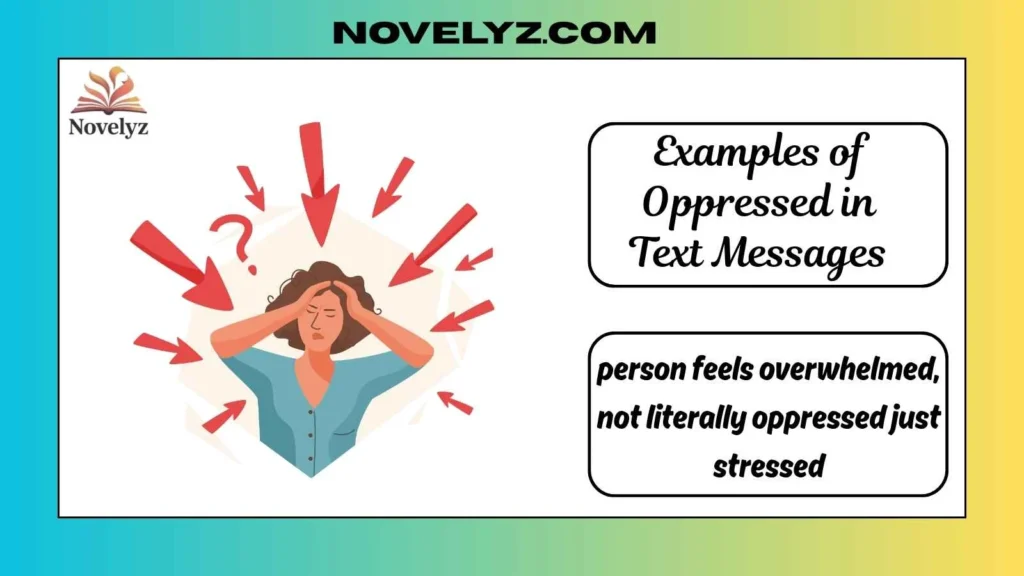
Here are simple, realistic chat examples:
Example 1
“I feel oppressed by my workload this week.”
Meaning: The person feels overwhelmed, not literally oppressed—just stressed.
Example 2
“That group is still oppressed in that country.”
Meaning: Refers to real social or political injustice.
Example 3
“My parents oppress me with too many rules lol.”
Meaning: Used jokingly to express frustration, not actual oppression.
Example 4
“Stop oppressing me with your opinions.”
Meaning: Sarcastic way of saying someone is being too controlling or intense.
👉 The meaning always depends on tone and context—not just the word itself.
Common Mistakes & Misunderstandings
Many people misunderstand the word “oppressed,” especially in casual chats.
Frequent mistakes:
- Thinking it always means physical violence
- Using it too lightly in serious discussions
- Confusing it with “depressed” or “stressed”
- Assuming it’s always political
- Not understanding sarcasm in online use
Cultural misunderstanding
In global online spaces, tone can easily be misread. A joke about being “oppressed by homework” might sound serious to someone else.
How to Respond When Someone Says “Oppressed”
Your response depends on context.
If it’s serious:
- “That sounds really difficult. Do you want to talk about it?”
- “I understand why you feel that way.”
Casual or joking:
- “Same, my notifications are oppressing me too.”
- “Real struggle.”
If you’re unsure:
- Ask politely: “Do you mean this seriously or just joking?”
When not to respond casually:
If the topic involves real injustice or emotional pain, avoid joking.
Is “Oppressed” Still Used in 2026?
Yes, the word is still widely used in 2026, but its usage has evolved.
Current usage trends:
- Still strong in education, news, and activism
- Common in social media discussions
- Used humorously in Gen Z meme culture
- Less formal in everyday texting unless discussing serious topics
Gen Z vs Millennials:
- Gen Z: more flexible, often meme-based or sarcastic usage
- Millennials: more likely to use it in serious or structured discussions
The meaning hasn’t changed, but the way people use it has expanded.
Related Slangs & Confused Terms
Here are similar or commonly confused words:
- Depressed: emotional mental health condition, not social control
- Stressed: feeling pressure or anxiety
- Oppression: the system or act of being oppressive
- Suppressed: something being held back or controlled
- Overwhelmed: emotionally overloaded, often used casually
These words often appear together in online discussions but carry different meanings.
FAQs:
What does oppressed mean in simple words?
It means being treated unfairly or controlled by someone in power or authority.
Is oppressed a negative word?
Yes, it usually describes unfair treatment or serious social issues.
Can oppressed be used jokingly?
Yes, in casual online chats people sometimes use it humorously for minor frustrations.
What is the difference between oppressed and depressed?
Oppressed is about external control or injustice, while depressed is about mental health.
Where is the word oppressed commonly used?
It is used in social media, education, news discussions, and sometimes casual texting.
Conclusion
The oppressed meaning is simple at its core: it refers to unfair treatment, control, or lack of freedom.
However, in modern 2026 digital culture, the word has expanded into both serious and casual usage depending on context.
If you understand tone and situation, you can easily interpret it in chats, social media posts, or discussions without confusion.
The key takeaway is simple: always read the context before assuming the meaning.
What’s your favorite word that changes meaning in chats?

I am a curious writer at Novelyz who loves exploring meanings behind words, emotions, and everyday expressions. Through simple and engaging explanations, I help readers understand language in a clear, relatable way.