Have you ever seen someone say “he’s an opp” or “watch out for the opps” on TikTok, Instagram, Snapchat, or in a text message and wondered what it actually means?
You’re not alone. The term opp has become one of the most common pieces of internet slang used by Gen Z, gamers, social media users, and online communities. While it looks simple, its meaning can change depending on the conversation.
If you’re searching for opp meaning, chances are you’ve seen it in a chat, meme, comment section, song lyric, or social media post and want a clear explanation. This guide explains exactly what it means, how people use it, and whether it’s still popular in 2026.
What Does “Opp” Mean in Chat or Text?
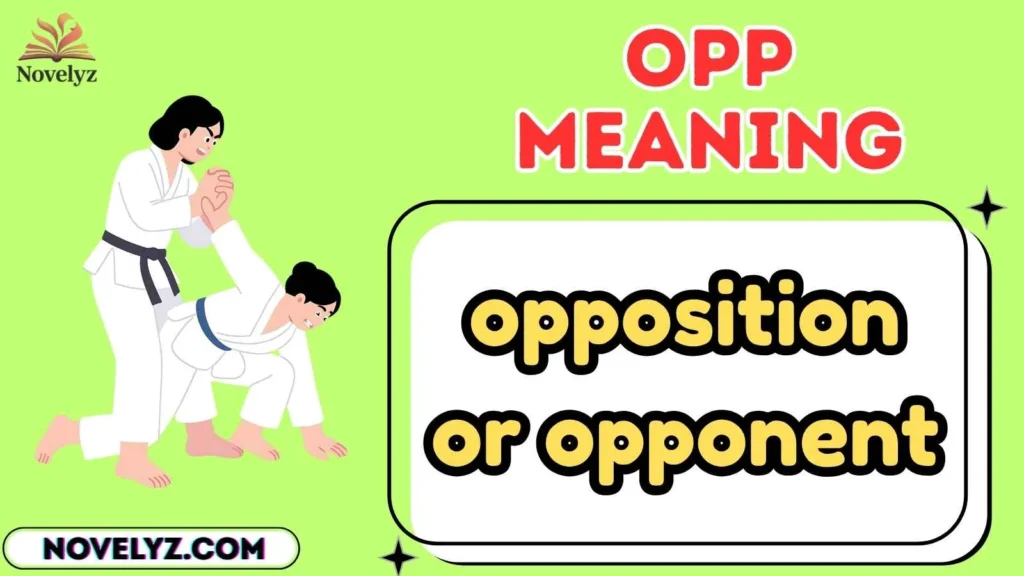
Opp means “opposition” or “opponent.” In modern slang, it usually refers to someone considered an enemy, rival, hater, or person who is against you.
In simple terms:
- An opp is someone who doesn’t support you.
- An opp may be a rival, competitor, or enemy.
- Sometimes the word is used jokingly for someone who disagrees with you.
Basic Definition
Opp = Opponent, Opposition, or Enemy
Examples:
- “He’s an opp.”
- “Don’t trust the opps.”
- “They’re moving like opps.”
Where Did Opp Come From?
The slang term originated in urban street culture and hip-hop communities, where “opposition” was shortened to “opp.”
Over time, social media platforms such as TikTok, Instagram, Snapchat, YouTube, and Twitter helped spread the term to mainstream internet culture.
Today, many people use opp casually, even when talking about minor disagreements or online drama.
How People Use “Opp” in Real Conversations
The meaning of opp depends heavily on context.
In Text Messages
People often use it to describe someone they dislike or don’t trust.
Example:
“Don’t invite him. He’s an opp.”
Meaning:
The person is viewed as an enemy, rival, or someone who causes problems.
On Instagram
You’ll often see comments like:
“Bro became an opp.”
This usually means someone switched sides, betrayed a friend, or started acting differently.
On Snapchat
Friends sometimes use opp jokingly.
Example:
“You didn’t save our streak? You’re an opp.”
The speaker isn’t serious. They’re teasing a friend.
On Discord
Gaming communities may use opp to describe rivals or opposing players.
Example:
“The opp team got destroyed.”
On Dating Apps
Occasionally, people jokingly call an ex an opp.
Example:
“My ex is definitely an opp.”
In Gaming Chats
The word often means:
- Enemy player
- Rival team
- Competitive opponent
Tone Matters
Depending on the situation, opp can sound:
- Serious
- Playful
- Sarcastic
- Competitive
- Humorous
Most everyday online usage is casual rather than threatening.
Real-Life Examples of “Opp” in Text Messages
Example 1
Text:
“He’s been talking behind my back. He’s an opp.”
Meaning:
The sender believes that person is acting against them.
Example 2
Text:
“You ate my fries again. You’re an opp.”
Meaning:
A playful joke between friends.
Example 3
Text:
“The opps are in the comments.”
Meaning:
People who disagree or criticize are showing up.
Example 4
Text:
“She switched friend groups and became an opp.”
Meaning:
The speaker feels betrayed.
Example 5
Text:
“We’re facing the same opps tonight.”
Meaning:
The group is competing against the same rivals.
Common Mistakes & Misunderstandings
Many people misunderstand the slang because they only know the traditional meaning of “opposition.
Mistake #1: Thinking Opp Always Means a Criminal Enemy
Not necessarily.
Online, people often use opp for:
- Haters
- Rivals
- Ex-friends
- Competitors
- Anyone who disagrees with them
Mistake #2: Taking It Too Seriously
Many Gen Z users use opp as a joke.
Example:
“My alarm clock is my biggest opp.”
Nobody actually views an alarm clock as an enemy.
Mistake #3: Using It in Professional Settings
Avoid using slang like opp in:
- Work emails
- Business meetings
- Academic writing
It may sound immature or confusing.
Mistake #4: Assuming Everyone Knows It
Older generations may not understand the slang immediately.
How to Respond When Someone Sends You “Opp”
If someone calls you an opp, your response depends on the tone.
Friendly Responses
- “What did I do?”
- “My bad.”
- “I’m innocent.”
- “That’s not fair.”
Joke Responses
- “Proud opp.”
- “Caught me.”
- “Guess I’m the villain now.”
If You’re Confused
Ask directly:
- “What do you mean by opp?”
- “Are you joking or serious?”
Most people will explain.
When Not to Use It Back
Avoid using opp if:
- You don’t understand the context.
- The conversation is professional.
- Someone is discussing a serious conflict.
Is “Opp” Still Used in 2026?
Yes. Opp remains widely used in 2026.
However, the way people use it has evolved.
Gen Z Usage
Gen Z frequently uses opp:
- On TikTok
- Snapchat
- Instagram Reels
- Discord
- Group chats
Often as a joke.
Millennial Usage
Millennials recognize the term but generally use it less often.
Current Trend
The slang is still relevant because it works in many situations:
- Real rivals
- Online drama
- Friendly jokes
- Gaming competition
Rather than fading away, it has become part of mainstream internet language.
Related Slangs & Abbreviations
If you’re learning modern internet slang, these terms are often connected to opp.
Ops
Plural form of opp.
Meaning:
Multiple opponents or rivals.
Hater
Someone who constantly criticizes or dislikes another person.
Snake
A person considered disloyal or untrustworthy.
NPC
Someone viewed as acting predictably or lacking original thought.
Clout Chaser
A person seeking attention or popularity online.
Ratio
When a reply receives more engagement than the original post.
No Cap
Means “I’m telling the truth.”
Bet
Means “okay,” “sure,” or “sounds good.”
Learning these terms makes social media conversations much easier to understand.
FAQs:
What does opp mean in text messages?
Opp usually means an opponent, rival, enemy, or someone acting against you.
What does opp mean in slang?
In slang, opp refers to a person viewed as opposition. It can be serious or used jokingly among friends.
What does “the opps” mean?
“The opps” is simply the plural form of opp and refers to multiple rivals or enemies.
Is opp a bad word?
No. It is slang rather than a swear word. However, it can sound negative depending on context.
Is opp still popular in 2026?
Yes. Opp remains widely used across TikTok, Instagram, Snapchat, Discord, gaming communities, and text messaging.
Conclusion:
Understanding opp meaning is much easier once you know the context. In most modern conversations, an opp is simply an opponent, rival, hater, or someone working against another person. Sometimes the term is serious, but many people use it humorously when joking with friends.
If you see the word on TikTok, Instagram, Snapchat, Discord, or in a text message, look at the surrounding conversation before deciding what it means. Context is everything.
Now that you know what opp means in text, chat, and slang, you’ll be able to understand and use the term with confidence in 2026 and beyond.
What’s your favorite chat abbreviation? Drop it in the comments!

I am a curious writer at Novelyz who loves exploring meanings behind words, emotions, and everyday expressions. Through simple and engaging explanations, I help readers understand language in a clear, relatable way.