If you’ve ever received a message that just says “…” and felt confused, ignored, or unsure how to reply, you’re not alone.
The “… meaning in text” is one of those small but powerful symbols in modern chat culture that can completely change the tone of a conversation.
In 2026, this tiny three dot expression is widely used across texting, Instagram, Snapchat, Discord, gaming chats, and even dating apps. And here’s the twist: its meaning is not always the same.
This guide breaks down everything you need to know in a simple, real-world way so you never misread it again.
What Does “…” Mean in Chat or Text?
In texting, “…” (ellipsis) is used to show a pause, silence, or unspoken emotion.
But the real meaning depends heavily on context.
The most common meanings include:
- Awkward silence – someone doesn’t know what to say
- Disapproval or judgment – silent reaction to something questionable
- Suspense or tension – waiting for impact or reaction
- Passive aggression – subtle frustration without saying it directly
- Thinking pause – the person is processing what you said
Originally, ellipsis was just punctuation in writing. But in internet culture, it evolved into a tone indicator—something that expresses emotion without words.
Over time, especially on social media and messaging apps, “…” became a full communication style on its own.
How People Use “…” in Real Conversations
You’ll see this symbol everywhere, but the meaning shifts depending on platform and tone.
1. Texting
Used to show hesitation or emotional reaction.
- Often means: “I don’t even know how to respond…”
2. Instagram / Snapchat
Used in replies or captions to create drama or suspense.
- Can feel sarcastic or judging depending on context
3. Discord / Gaming chats
Used during gameplay reactions or awkward team moments.
- Often silent disappointment or disbelief
4. Dating apps
Very important here—tone matters a lot.
- Can signal interest, confusion, or subtle rejection
5. Forums / Reddit-style discussions
Used for sarcasm, commentary, or emotional reactions without words
When it feels natural:
- Casual chats
- Emotional conversations
- Situations with sarcasm or awkwardness
When it feels awkward:
- Formal messages
- Professional communication
- Clear factual discussions
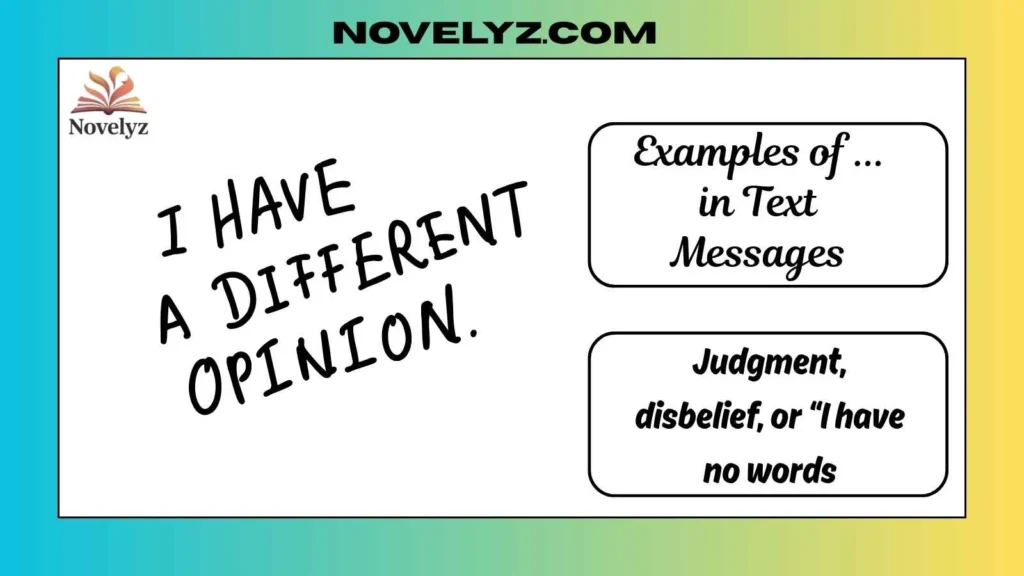
Real-Life Examples of “…” in Text Messages
Example 1:
Friend: I told him I like him
Reply: …
Meaning: “That’s… complicated” or silent shock.
Example 2:
Friend: I spent my rent money on gaming skins
Reply: …
Meaning: Judgment, disbelief, or “I have no words.”
Example 3:
You: I think I passed the exam
Reply: …
Meaning: Suspense—maybe they’re waiting for confirmation or joking tension.
Example 4:
Person A: I forgot our plans again
Person B: …
Meaning: Frustration or disappointment without directly saying it.
The key thing: “…” is never just empty—it always carries emotion.
Common Mistakes & Misunderstandings
Many people misread “…” because it’s subtle.
Common mistakes include:
- Thinking it always means anger (it doesn’t)
- Assuming someone is ignoring you
- Overreacting to neutral pauses
- Using it in formal chats (which feels unprofessional)
Cultural misunderstanding:
- Older users may see it as just punctuation
- Younger users often read emotional meaning into it
So yes, generational gap plays a big role here.
How to Respond When Someone Sends You “…”
Your response depends on tone.
Safe replies:
- “What’s up?”
- “Did I say something wrong?”
- “I feel like there’s more to that 😅” (informal chats only)
If you’re unsure:
Ask directly:
- “You good?”
- “What do you mean by that?”
When NOT to mirror it:
Don’t reply with “…” unless you understand the tone. It can escalate confusion or tension.
Is “…” Still Used in 2026?
Yes—very much.
But it has evolved.
In 2026 usage:
- More sarcastic than ever
- Heavily used in memes and reaction culture
- Common in short-form messaging (TikTok comments, DMs, Discord)
Gen Z vs Millennials:
- Gen Z: uses it for humor, sarcasm, or dramatic effect
- Millennials: more likely to use it for hesitation or emotional pause
It’s not fading—it’s becoming more expressive.
Related Slangs & Abbreviations
Here are similar expressions you might see:
- “…?” → Confusion or disbelief
- “bruh” → Shock or disappointment
- “…” + emoji combos → Mixed emotional reactions
- “say less” → Agreement or understanding
- “hmm” → Thinking or skepticism
- “lol…” → Nervous or awkward humor
These often appear together in modern chat language, especially in casual conversations.
FAQs
What does “…” mean in text messages?
It usually shows silence, hesitation, judgment, or emotional reaction depending on context.
Is “…” rude in chat?
Not always. It can be neutral, sarcastic, or emotional. Tone matters more than the symbol itself.
Why do people reply with “…”?
To express feelings without words—like confusion, disbelief, or awkwardness.
Does “…” mean someone is ignoring you?
Not necessarily. It often means they are thinking or reacting emotionally.
Is “…” still popular in 2026?
Yes, it is widely used across texting apps and social media, especially for tone and reaction.
Conclusion
The “… meaning in text” is a perfect example of how modern communication has evolved beyond words. What looks like nothing actually carries emotion, attitude, and context.
In 2026, it remains a powerful tool in digital conversations used for sarcasm, hesitation, tension, and reactions across platforms like Instagram, Snapchat, Discord, and messaging apps.
Understanding it helps you read between the lines and avoid miscommunication in everyday chats.
So next time someone sends “…”, don’t panic—just read the vibe.
What’s your favorite chat abbreviation? Drop it in the comments!

I am a curious writer at Novelyz who loves exploring the true meanings behind words, phrases, and modern expressions. My goal is to explain language in a simple, clear way that feels real, relatable, and easy for everyone to understand.