Have you ever received a message that simply said “yeah” and wondered what the person actually meant?
At first glance, “yeah” seems like a simple word. But in modern texting, social media conversations, gaming chats, and dating apps, its meaning can change depending on context, tone, and even punctuation.
Understanding the yeah meaning in chat is important because online communication often relies on subtle cues. A casual “yeah” can mean agreement, excitement, boredom, sarcasm, or even frustration.
In this updated 2026 guide, you’ll learn exactly what “yeah” means in text messages, how people use it online, common misunderstandings, and how to respond naturally in different situations.
What Does “Yeah” Mean in Chat or Text?
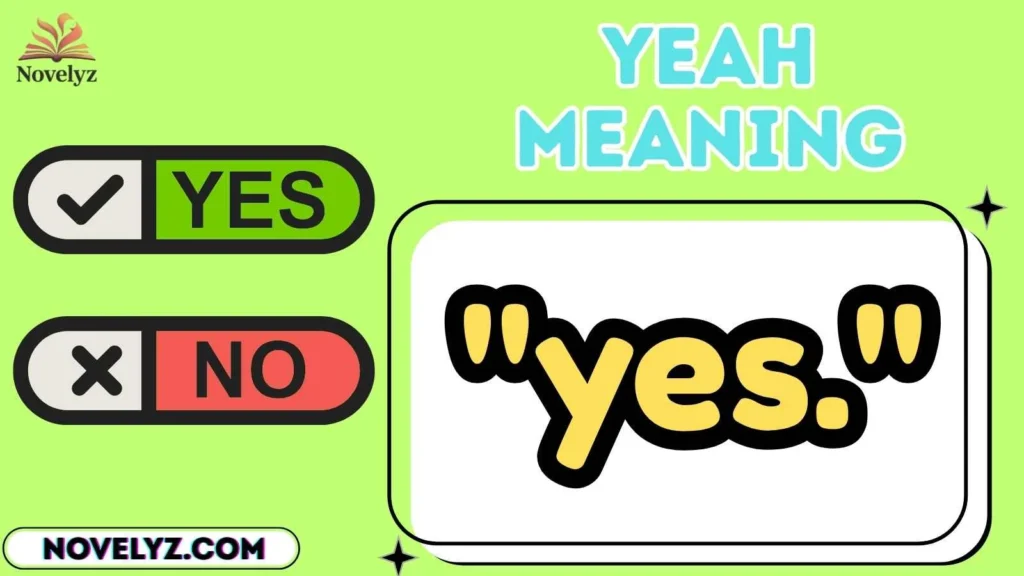
The basic yeah meaning in text is simple:
“Yeah” is an informal way of saying “yes.”
People use it to show agreement, confirmation, acknowledgment, or acceptance.
For example:
- “Are you coming tonight?”
- “Yeah.”
In this conversation, “yeah” simply means “yes.”
However, online communication isn’t always that straightforward. The meaning often depends on context.
Common Meanings of “Yeah”
Agreement
- “Yeah, I agree with you.”
Confirmation
- “Yeah, that’s correct.”
Acknowledgment
- “Yeah, I heard what you said.”
Reluctant Acceptance
- “Yeah, I guess so.”
Sarcasm
- “Yeah, right.”
Where Did “Yeah” Come From?
“Yeah” has existed in spoken English for centuries as a casual alternative to “yes.”
As texting and social media became popular, people naturally carried it into digital conversations. Today, it’s one of the most frequently used words in online communication because it feels more relaxed and conversational than “yes.”
Over time, internet culture has added new layers of meaning depending on tone, context, and relationship dynamics.
How People Use “Yeah” in Real Conversations
You’ll find “yeah” almost everywhere online:
- Text messages
- Instagram DMs
- Snapchat chats
- Discord servers
- Reddit discussions
- Gaming chats
- Dating apps
- Group conversations
Casual Agreement
The most common use is simple agreement.
Example:
- “That movie was amazing.”
- “Yeah, it really was.”
Here, the speaker is agreeing naturally.
Showing Interest
Sometimes “yeah” keeps a conversation moving.
Example:
- “I started a new job today.”
- “Yeah? How did it go?”
This usage shows curiosity and engagement.
Reluctant Response
A short “yeah” can sometimes signal hesitation.
Example:
- “Do you want to go?”
- “Yeah… I guess.”
The person agrees, but not enthusiastically.
Sarcastic Use
Online users often use “yeah” sarcastically.
Example:
- “I’m definitely finishing this project in one hour.”
- “Yeah, sure.”
The speaker doesn’t actually believe it.
Dating App Conversations
In dating chats, a one-word “yeah” can feel cold or uninterested.
Example:
- “How was your day?”
- “Yeah.”
Many people interpret this as low effort or a lack of engagement.
Real-Life Examples of “Yeah” in Text Messages
Let’s look at some realistic examples.
Example 1: Friendly Agreement
Friend: “Pizza tonight?”
You: “Yeah!”
Meaning: Excited agreement.
Example 2: Basic Confirmation
Friend: “Did you finish the assignment?”
You: “Yeah.”
Meaning: Simple confirmation.
Example 3: Reluctant Acceptance
Friend: “Want to help me move this weekend?”
You: “Yeah, okay.”
Meaning: Agreeing, but not very excited.
Example 4: Sarcasm
Friend: “I’m going to become a millionaire next week.”
You: “Yeah, right.”
Meaning: You don’t believe it.
Example 5: Continuing a Conversation
Friend: “I met a celebrity yesterday.”
You: “Yeah? Who was it?”
Meaning: Interest and curiosity.
Why Context Matters
Notice how the same word changes meaning depending on:
- Punctuation
- Conversation topic
- Relationship between speakers
- Tone of previous messages
That’s why understanding context is more important than memorizing a single definition.
Common Mistakes & Misunderstandings
Even native English speakers sometimes misread “yeah.”
Assuming It Always Means Enthusiasm
Many people think “yeah” automatically sounds excited.
Not always.
Compare:
- “Yeah!”
- “Yeah.”
- “yeah…”
Each feels different.
Ignoring Punctuation
Punctuation changes tone significantly.
Examples:
- “Yeah!” = enthusiastic
- “Yeah.” = neutral
- “Yeah…” = uncertain
- “Yeah, right.” = sarcastic
Misreading Short Replies
Some people see a one-word “yeah” and assume someone is angry.
In reality, the person may simply be busy.
Generational Differences
Older users often view “yeah” as a normal response.
Younger users sometimes analyze short messages more closely and may interpret them as uninterested or passive.
How to Respond When Someone Sends You “Yeah”
The best response depends on context.
If They’re Agreeing
You can continue the conversation naturally.
Example:
- “Yeah.”
- “Great, let’s do it.”
If They Seem Interested
Expand the discussion.
Example:
- “Yeah?”
- “Let me tell you what happened.”
If You’re Unsure
Ask a follow-up question.
Example:
- “Yeah.”
- “What do you think about it?”
Safe Beginner Responses
If you’re not sure what they mean, these responses work well:
- “Got it.”
- “Sounds good.”
- “Okay.”
- “Thanks.”
- “What do you mean?”
When Not to Use It Back
If you’re in a professional email or formal business conversation, “yes” is usually more appropriate than “yeah.”
Is “Yeah” Still Used in 2026?
Absolutely.
Despite new slang appearing every year, “yeah” remains one of the most common words in digital communication.
Among Gen Z
Gen Z uses “yeah” constantly in:
- Text messages
- TikTok comments
- Discord chats
- Snapchat conversations
Among Millennials
Millennials also use it frequently because it feels natural and conversational.
Current Trend
Rather than disappearing, “yeah” continues to evolve through:
- Tone indicators
- Punctuation
- Memes
- Internet humor
- Short-form messaging
In 2026, it’s still one of the most recognizable and widely used informal responses online.
Related Slangs & Abbreviations
If you’re learning internet slang, you’ll often see these terms alongside “yeah.”
Yup
A casual version of “yes.”
Yep
Another friendly alternative to “yes.”
Yea
An older spelling sometimes used in polls or votes.
Bet
- Okay
- Sounds good
- I agree
Fr
Short for “for real.”
Used to express agreement.
Example:
- “That game was amazing.”
- “Fr.”
Facts
A slang term meaning strong agreement.
Example:
- “Summer is too short.”
- “Facts.”
Ngl
Short for “not gonna lie.”
Often used before expressing an opinion.
These related terms help build a broader understanding of modern online language.
FAQs:
What does “yeah” mean in text messages?
“Yeah” is an informal way of saying “yes.” It usually expresses agreement, confirmation, or acknowledgment.
Is “yeah” rude in texting?
Not usually. However, a very short “yeah” can sometimes seem uninterested depending on context.
What’s the difference between “yes” and “yeah”?
“Yes” sounds more formal, while “yeah” feels casual and conversational.
What does “yeah?” mean with a question mark?
It often shows curiosity or invites the other person to continue talking.
Is “yeah” still popular in 2026?
Yes. It’s one of the most commonly used words in texting, social media, gaming communities, and online conversations.
Conclusion:
The yeah meaning in chat is usually simple: it’s a casual version of “yes.” However, context can completely change how it’s interpreted.
Depending on the conversation, “yeah” can express agreement, curiosity, hesitation, sarcasm, or simple acknowledgment. That’s why paying attention to tone, punctuation, and context is so important.
The good news is that once you’ve seen it used in a few real conversations, it becomes easy to understand.
Whether you’re texting friends, chatting on Discord, using dating apps, or scrolling through social media, you’ll continue seeing “yeah” everywhere in 2026 and beyond.
What’s your favorite chat abbreviation? Drop it in the comments!

I am a curious writer at Novelyz who loves exploring the true meanings behind words, phrases, and modern expressions. My goal is to explain language in a simple, clear way that feels real, relatable, and easy for everyone to understand.