If you’ve searched for resurrection meaning, you’re probably wondering what the word actually means and how people use it in everyday conversations.
While resurrection is often associated with religion, the term is also used in modern culture, social media, gaming communities, entertainment, and casual conversations.
Depending on the context, it can refer to someone coming back to life, a major comeback, or the revival of something that seemed completely gone.
Understanding the resurrection meaning helps you interpret conversations, movies, books, online discussions, and even memes more accurately.
This updated 2026 guide explains the meaning in simple language, shows real examples, and clears up common confusion.
What Does “Resurrection” Mean?
Resurrection means bringing someone or something back to life, activity, existence, or importance after it seemed dead, lost, ended, or forgotten.
Simple Definition
The word resurrection generally refers to:
- Returning from death to life
- Reviving something that disappeared
- Making something important again
- Experiencing a dramatic comeback
Origin of the Word
The word comes from the Latin term resurgere, which means to rise again.
Historically, resurrection has been strongly connected to religious beliefs, especially Christianity. Over time, however, the term expanded beyond religion and is now used in many everyday situations.
How the Meaning Has Evolved
Today, people use resurrection in both literal and figurative ways.
For example:
- Religious resurrection
- Revival of a business
- Return of a sports team
- Comeback of a celebrity
- Reboot of a TV show
- Revival of an old internet trend
In modern culture, resurrection often means a powerful return after failure, disappearance, or decline.
How People Use “Resurrection” in Real Conversations
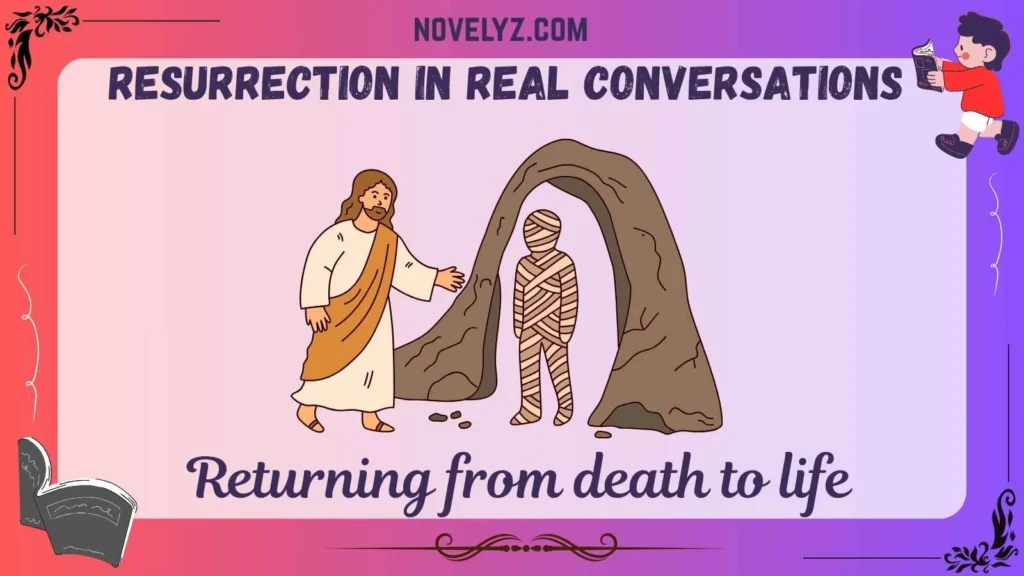
The way people use resurrection depends heavily on context.
In Everyday Conversations
People often use it when talking about comebacks.
Examples:
- “That company made a complete resurrection after bankruptcy.”
- “His career experienced a resurrection after the new movie.”
On Social Media
Platforms such as:
- TikTok
- X
often use resurrection to describe trends returning unexpectedly.
Example:
“The resurrection of early 2000s fashion is wild.”
In Gaming
Gamers frequently use resurrection when referring to:
- Revive abilities
- Respawn mechanics
- Bringing teammates back
Example:
“Can someone resurrect me before the boss fight starts?”
In Movies and Entertainment
Resurrection is commonly used when:
- Characters return from death
- Franchises get rebooted
- Old TV shows return
Example:
“The franchise got a resurrection after years of being inactive.”
Tone and Intent
Resurrection can sound:
- Serious
- Inspirational
- Dramatic
- Humorous
- Symbolic
It usually carries a positive tone because it implies recovery or renewal.
Real-Life Examples of Resurrection

Here are some examples showing how the meaning changes depending on context.
Example 1: Religious Context
Message:
“The story focuses on resurrection and eternal life.”
Meaning:
Returning from death to life.
Example 2: Career Comeback
Message:
“The singer’s new album sparked a resurrection of her career.”
Meaning:
A successful comeback.
Example 3: Business Revival
Message:
“The company experienced a financial resurrection.”
Meaning:
Recovery after serious decline.
Example 4: Internet Trend
Message:
“We’re witnessing the resurrection of old meme culture.”
Meaning:
Something popular again after being forgotten.
Example 5: Gaming
Message:
“Use your resurrection spell on the healer.”
Meaning:
Bring a defeated character back into play.
Common Mistakes & Misunderstandings
Many people misunderstand resurrection because it has multiple uses.
Mistake #1: Assuming It Only Means Religious Revival
While religion is the most well-known use, resurrection can also describe:
- Businesses
- Trends
- Careers
- Sports teams
- Entertainment franchises
Mistake #2: Confusing Resurrection with Rebirth
Although related, they’re different.
Resurrection:
Something returns after ending or dying.
Rebirth:
A completely new beginning or transformation.
Mistake #3: Using It for Minor Improvements
Resurrection usually suggests a major return.
For example:
- Correct: “The brand’s resurrection shocked the industry.”
- Less natural: “My phone battery had a resurrection after charging.”
Mistake #4: Taking It Too Literally
In casual conversation, resurrection is often symbolic rather than literal.
How to Respond When Someone Uses “Resurrection”
The best response depends on context.
If They’re Talking About a Comeback
You could say:
- “That’s an impressive comeback.”
- “I didn’t expect them to recover.”
- “They really turned things around.”
If It’s Religious
You may respond respectfully:
- “That’s an important belief.”
- “Interesting perspective.”
If It’s About a Trend
You might say:
- “Everything old becomes new again.”
- “I never thought that trend would return.”
When to Ask for Clarification
Ask if you’re unsure.
Examples:
- “Do you mean literally or figuratively?”
- “Are you talking about a comeback?”
Is “Resurrection” Still Used in 2026?
Yes, absolutely.
In fact, resurrection remains common because people constantly discuss:
- Brand revivals
- Career comebacks
- Entertainment reboots
- Social media trends
- Gaming mechanics
Gen Z Usage
Gen Z often uses resurrection metaphorically.
Examples:
- “The resurrection of that meme needs to stop.”
- “Vintage fashion is having a resurrection.”
Millennial Usage
Millennials frequently use it when discussing:
- Nostalgia
- Reboots
- Career comebacks
- Pop culture returns
Current Trend
Rather than fading away, resurrection has expanded into more cultural and digital contexts.
Related Words and Terms
If you’re researching resurrection meaning, you may also encounter these related terms.
Revival
Something becoming active again.
Rebirth
A fresh start or transformation.
Comeback
Returning to success after decline.
Renewal
Restoring strength or effectiveness.
Revivalism
Renewed interest in older ideas, styles, or traditions.
Reincarnation
A spiritual belief involving a new life after death.
Revive
To restore life, energy, or activity.
These terms are related but not always interchangeable.
FAQs:
What is the simple meaning of resurrection?
Resurrection means bringing someone or something back to life, activity, or importance after it appeared to be gone or finished.
Is resurrection only a religious term?
No. Although it has strong religious roots, it is widely used to describe comebacks, revivals, and renewed success.
What does resurrection mean in everyday language?
In everyday conversation, it usually refers to a dramatic recovery or successful return.
What is the difference between resurrection and revival?
Resurrection often implies a stronger return after complete decline, while revival generally means renewed activity or interest.
Is resurrection still commonly used in 2026?
Yes. The term remains popular in discussions about entertainment, gaming, business, social media trends, and personal comebacks.
Conclusion:
The resurrection meaning goes far beyond its religious origins. Today, the word can describe everything from spiritual beliefs and gaming mechanics to business recoveries, celebrity comebacks, and revived internet trends.
In simple terms, resurrection refers to a return after something seemed lost, finished, forgotten, or dead.
Once you understand the context, the meaning becomes much easier to recognize in conversations, social media posts, movies, news articles, and everyday life.
What’s your favorite chat abbreviation? Drop it in the comments!

I am a curious writer at Novelyz who loves exploring meanings behind words, emotions, and everyday expressions. Through simple and engaging explanations, I help readers understand language in a clear, relatable way.