If you’ve seen someone call a message, caption, or person “pretentious” and felt a bit confused, you’re not alone.
The term shows up a lot in modern chats, especially when people react to posts that feel “too try-hard” or overly intellectual.
Understanding the pretentious meaning matters because it helps you read tone correctly and avoid sounding that way yourself.
This guide breaks it down in plain English, with real examples from texting, social media, and online culture. Updated for 2026, so it reflects how people actually use it today.
What Does “Pretentious” Mean in Chat or Text?
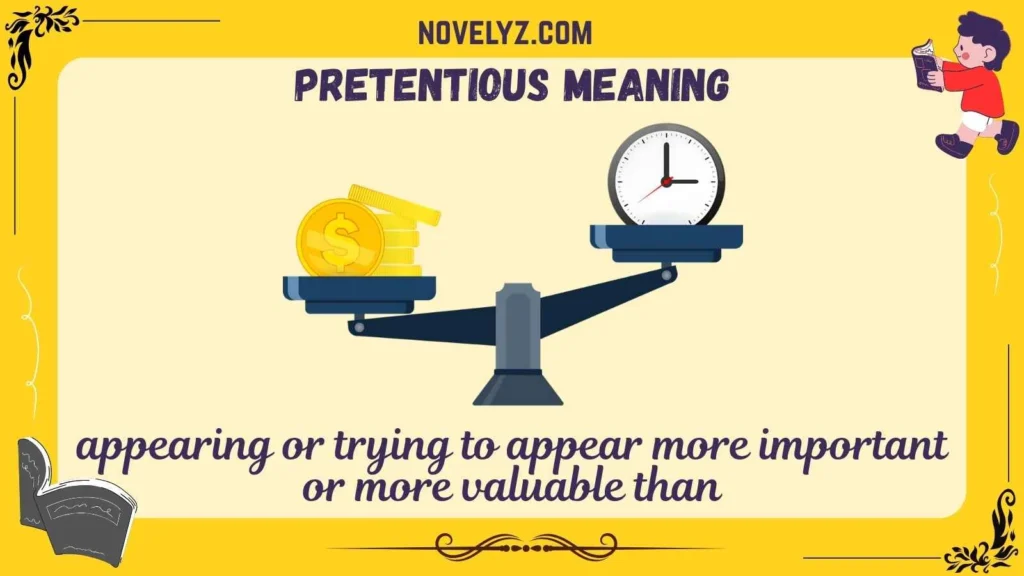
Pretentious (in slang and everyday chat) means:
Trying to appear more important, intelligent, cultured, or deep than you actually are—often in a way that feels fake or forced.
Simple breakdown:
- Positive intent (rare): Someone trying to sound smart or refined
- Common usage: Mild insult or criticism
- Tone: Usually negative or sarcastic
Example:
“That caption is so pretentious.”
Translation:
The caption feels fake-deep or like it’s trying too hard to impress.
Origin & evolution
The word isn’t new—it comes from formal English—but in internet culture, it’s evolved into a casual callout for “trying too hard.” Especially on platforms like Instagram or Reddit, it’s used quickly and bluntly.
How People Use “Pretentious” in Real Conversations
You’ll see pretentious across multiple platforms:
- Texting: Calling out a friend jokingly
- Instagram: Critiquing captions or aesthetic posts
- Snapchat: Reacting to someone’s story
- Discord: Debating opinions or takes
- Dating apps: Describing someone’s vibe
- Forums/Reddit: Critiquing ideas or writing style
When it feels natural
- When someone is over-explaining simple things
- When a post feels fake-deep or philosophical for no reason
- When someone is name-dropping or showing off knowledge
When it feels awkward
- In serious or professional conversations
- With people who don’t understand slang tone
- If used too harshly (can sound insulting)
Tone & intent
- Casual/joking: “Bro stop being pretentious lol”
- Critical: “That review sounds pretentious”
- Sarcastic: “Wow, very deep… not pretentious at all”
It’s often playful among friends—but can easily come off rude if misused.
Real-Life Examples of “Pretentious” in Text Messages
Here are realistic chat-style examples with meaning:
Example 1
“Why is he using big words for no reason? So pretentious.”
Meaning: He’s trying too hard to sound smart.
Example 2
“That quote in her bio is kinda pretentious tbh.”
Meaning: The quote feels fake-deep or unnecessary.
Example 3
“I tried reading that book but it felt pretentious.”
Meaning: The book seemed overly complex or trying to impress.
Example 4 (joking)
“I said ‘culinary experience’ instead of ‘food’… I’m becoming pretentious.”
Meaning: Self-aware joke about sounding fancy.
Example 5 (dating context)
“He kept talking about philosophy all night. A bit pretentious.”
Meaning: He seemed like he was trying to impress intellectually.
Common Mistakes & Misunderstandings
1. Thinking it means “smart”
Not exactly.
Pretentious ≠ intelligent
It implies fake or exaggerated intelligence.
2. Using it too aggressively
Calling someone pretentious can feel like:
- Judging them
- Dismissing their personality
Best used lightly or jokingly unless you mean it seriously.
3. Misreading tone
Someone saying:
“That’s pretentious”
Could mean:
- Light teasing
- Genuine criticism
- Sarcasm
Context matters a lot.
4. Cultural/generational gap
- Gen Z: Uses it casually and ironically
- Older users: May take it more seriously
This can create awkward moments if tone isn’t clear.
How to Respond When Someone Sends You “Pretentious”
If someone uses this word toward you or something you shared, here’s how to handle it:
Safe responses
- “Haha fair enough”
- “Okay maybe a little”
- “I didn’t mean it like that”
If you’re unsure
- “What do you mean?”
- “Too much?”
If you disagree
- “I was just expressing myself”
- “Not trying to be pretentious, just sharing”
When NOT to use it back
Avoid saying it if:
- You’re in a serious conversation
- The person might take offense
- You don’t know them well
Is “Pretentious” Still Used in 2026?
Yes—very much.
Current relevance:
- Still common in social media culture
- Frequently used in comment sections and debates
- Popular in aesthetic and “deep content” discussions
Usage trends:
- Gen Z: Uses it casually, often jokingly
- Millennials: Use it more critically
- Online culture: Still strong, especially in critique-based spaces
It hasn’t faded—it’s just become more casual and meme-aware.
Related Slangs & Abbreviations
Here are similar or connected terms:
- Try-hard – Someone forcing effort to impress
- Fake deep – Acting philosophical without real depth
- Cringe – Socially awkward or embarrassing
- Extra – Over-the-top behavior
- Pick me – Seeking attention/validation
- Elitist – Acting superior or exclusive
These often overlap depending on context.
FAQs :
What does “pretentious” mean in text?
It means someone is trying too hard to sound smart, deep, or impressive in a way that feels fake.
Is calling someone pretentious rude?
It can be. It depends on tone—joking with friends is fine, but it may offend others.
What’s the difference between pretentious and intelligent?
Intelligent is genuine. Pretentious suggests fake or exaggerated intelligence.
Do people still use “pretentious” in 2026?
Yes, especially on social media and in casual conversations.
Can something (not a person) be pretentious?
Yes—captions, books, movies, and even conversations can feel pretentious.
Conclusion :
The pretentious meaning in modern chat is simple: trying too hard to seem impressive in a way that feels unnatural. It’s widely used, often casual, and heavily dependent on tone.
Once you understand it, you’ll spot it instantly and more importantly, you’ll know how to respond without overthinking.
Modern slang isn’t about perfection. It’s about reading the vibe.
What’s your favorite chat abbreviation? Drop it in the comments!

I am a curious writer at Novelyz who loves exploring meanings behind words, emotions, and everyday expressions. Through simple and engaging explanations, I help readers understand language in a clear, relatable way.