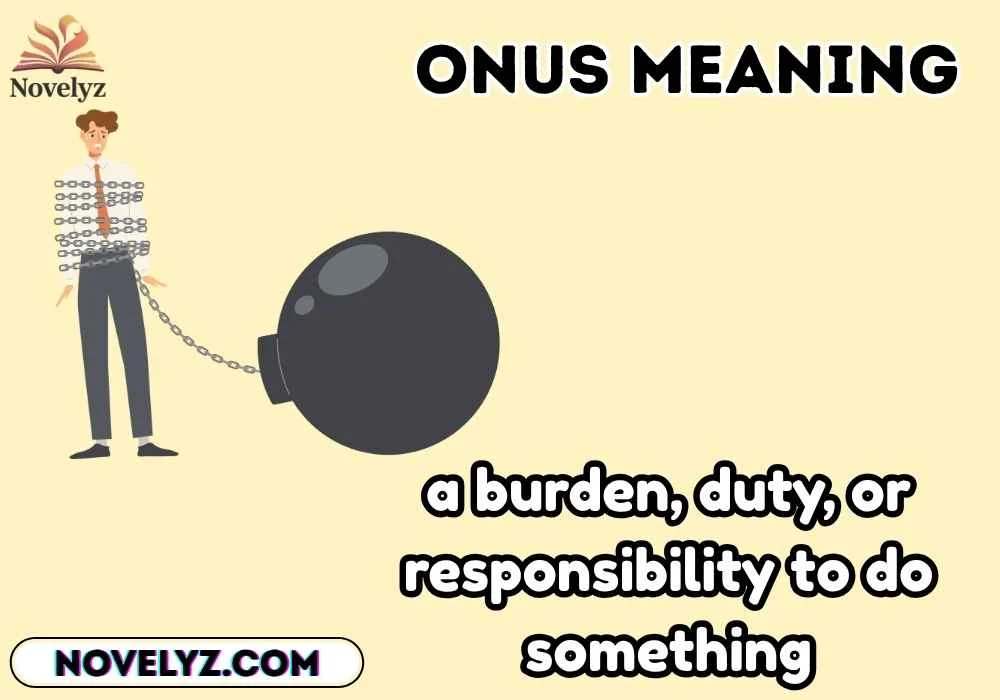
The onus meaning is often searched by people who come across the word in formal writing, legal documents, or advanced English texts and feel unsure about what it actually implies.
In simple terms, onus refers to a responsibility, duty, or burden placed on someone to complete a task or prove something. Although it may sound complex, the concept behind the word is actually straightforward once broken down with clear examples.
In everyday English, we more commonly use words like responsibility or duty, but onus is a more formal alternative that is frequently used in academic, professional, and legal contexts.
Understanding this word not only improves your vocabulary but also helps you better interpret formal communication where precise language matters.
What Does “Onus” Mean in Chat or Text?
The onus meaning is simple: it refers to responsibility, duty, or burden placed on someone.
In plain English:
- If something is your onus, it means it’s your responsibility to do it
- It often sounds formal or serious
- It is commonly used in professional, legal, or structured communication
The word comes from Latin, where onus literally means “burden.” Over time, English adopted it to describe responsibility in a more formal tone.
Even though it is not modern slang, people still see it in:
- Work emails
- Legal discussions
- Academic writing
- Formal conversations online
So when someone searches “onus meaning slang,” they are usually just trying to understand a serious word used in a casual space.
How People Use “Onus” in Real Conversations

Unlike slang terms used on TikTok or Discord, onus is more formal language. Still, it appears in digital communication when someone wants to sound serious or precise.
You’ll see it used in:
- Texting: When someone explains responsibility clearly
- Email: Especially in work or academic messages
- Discord or forums: When discussing rules or accountability
- Gaming chats: Sometimes in team responsibility discussions
- Social media debates: When people talk about who is responsible for something
It usually carries a tone that is:
- Serious
- Slightly formal
- Direct
- Sometimes firm or defensive
It is rarely used in flirty, joking, or casual Gen Z slang conversations.
Real-Life Examples of “Onus” in Text Messages
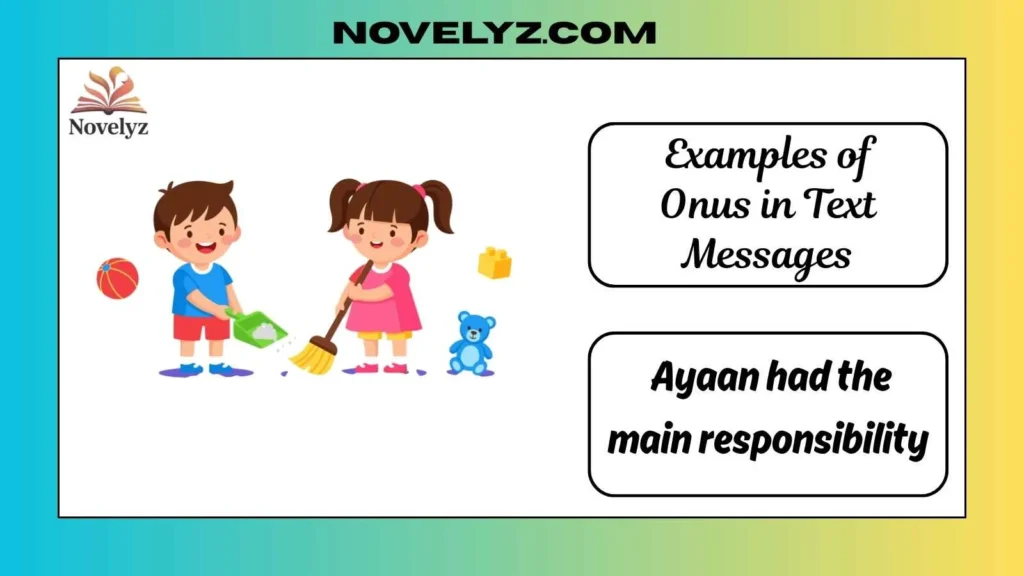
Here are some simple, real-world style examples to make the onus meaning easier to understand:
Example 1: Work chat
“The onus is on you to submit the report by Friday.”
Meaning: You are responsible for completing and submitting it.
Example 2: Group project
“We all helped, but the onus was on Ayaan to finalize it.”
Meaning: Ayaan had the main responsibility.
Example 3: Online discussion
“The onus is on companies to protect user data.”
Meaning: Companies are responsible for data safety.
Example 4: Friendly reminder tone
“I did my part, now the onus is on you.”
Meaning: Now it’s your turn to take responsibility.
In all cases, context decides how strong or serious the message feels.
Common Mistakes & Misunderstandings
Many people misunderstand onus meaning because it sounds similar to modern slang patterns, but it is not slang at all.
Here are common mistakes:
- Confusing it with casual internet abbreviations
- Thinking it means “blame” only (it can mean responsibility, not just fault)
- Using it in very casual chats where it sounds unnatural
- Overusing it to sound smart, which can feel forced
Another mistake is mixing it with slang terms like “ASL” or “IMO,” which belong to internet texting culture. Onus does not belong in that category.
Using it in the wrong tone can make messages feel overly serious or even slightly aggressive.
How to Respond When Someone Sends You “Onus”
If someone uses onus in a message, your response depends on context.
Here are simple ways to reply:
- If you agree:
“Got it, I’ll take care of it.” - If you need clarity:
“Just to confirm, is this my responsibility?” - If it’s a group task:
“Understood, I’ll handle my part.” - If you feel unsure:
Ask politely for clarification instead of guessing.
Avoid replying with slang or jokes unless the tone clearly allows it, because “onus” usually appears in serious conversations.
Is “Onus” Still Used in 2026?
Yes, but not as slang.
In 2026, onus meaning is still relevant, especially in:
- Workplace communication
- Academic writing
- Legal and official discussions
- Structured online debates
Gen Z vs Millennial usage:
- Millennials: More familiar due to workplace exposure
- Gen Z: Recognizes it but uses it less in casual speech
It is not fading, but it is also not evolving into slang. Instead, it remains a formal vocabulary word that occasionally appears in digital conversations.
Related Slangs & Abbreviations
To understand “onus meaning” better, here are related terms often seen in similar contexts:
- Responsibility – basic everyday version of onus
- Accountability – formal version used in workplaces
- Blame – when responsibility is negative
- Obligation – duty or requirement to do something
- IMO (In My Opinion) – informal way to express views in chats
- ASAP – used to indicate urgency, often linked with responsibility
These help you understand how formal and informal communication differs online.
❓ FAQ – Onus Meaning
1. What is the simple meaning of onus?
The onus meaning is responsibility, duty, or burden placed on someone to do something or prove a point, especially in formal or legal situations.
2. How do you use onus in a sentence?
You can use onus like this:
“It is the onus of the applicant to provide correct documents.”
Here, it means the responsibility is on the applicant.
3. Is onus a negative word?
Not always. Onus is neutral, but it often feels slightly formal or serious because it refers to responsibility or burden.
4. What is the synonym of onus?
Common synonyms of onus include:
- Responsibility
- Duty
- Burden
- Obligation
- Accountability
5. What is the difference between onus and responsibility?
Onus is more formal and often used in legal or official contexts, while responsibility is more common in everyday language.
6. Where is the word onus commonly used?
The word onus is commonly used in:
- Legal writing
- Formal documents
- Academic English
- Professional communication
7. What is the origin of the word onus?
The word onus comes from Latin, where it originally meant “burden” or “load.”
Conclusion
The onus meaning is straightforward once you break it down: it simply refers to responsibility or duty. Even though it’s not part of modern slang culture, it still appears in professional and serious digital communication.
Understanding it helps you read messages more confidently and respond in the right tone without confusion. In 2026, it remains a useful vocabulary word rather than a trending internet slang term.
What’s your favorite chat abbreviation? Drop it in the comments!

I am a curious writer at Novelyz who loves exploring meanings behind words, emotions, and everyday expressions. Through simple and engaging explanations, I help readers understand language in a clear, relatable way.