If you’ve seen “danke” pop up in messages, comments, or gaming chats and felt confused, you’re not alone.
This small word shows up more often in modern conversations than you’d expect especially in mixed-language internet culture.
In simple terms, “danke” means “thank you.” But online, it’s not always just about gratitude. The tone, context, and platform can slightly change how it feels.
Understanding danke meaning in chat helps you avoid awkward replies and makes you sound more natural in global conversations. Updated for 2026, this guide breaks everything down in a clear, real-world way.
What Does “Danke” Mean in Chat or Text?
“Danke” is a German word that translates directly to “thank you” in English.
In online conversations, people use it casually the same way they’d say:
- Thanks
- Thx
- Ty
But here’s where it gets interesting:
In chat culture, “danke” can carry slightly different vibes depending on context:
- Simple gratitude → “Danke!” = Thanks
- Playful tone → Used to sound a bit stylish or different
- Ironic or sarcastic → “Danke…” (when something annoying happens)
Origin & Evolution
- Originally from the German language
- Adopted into global internet slang through:
- Gaming communities
- Meme culture
- Multilingual social media users
Over time, it became a casual, aesthetic alternative to “thanks”—especially among younger users who like mixing languages in chat.
How People Use “Danke” in Real Conversations
You’ll see “danke” in chat across multiple platforms:
- Text messages
- Instagram comments & DMs
- Snapchat streak chats
- Discord servers
- Gaming lobbies
- Reddit threads
- Even dating apps
When it feels natural
- When talking to international friends
- In gaming or online communities
- When you want to sound a bit unique or playful
When it can feel awkward
- In formal conversations
- With people unfamiliar with basic German words
- In professional emails or serious discussions
Tone & Intent
- Casual → “danke bro”
- Friendly → “danke!! appreciate it”
- Flirty → “danke 🙂 you’re sweet”
- Sarcastic → “danke for nothing”
It’s not just about the word—it’s about how it’s delivered.
Real-Life Examples of “Danke” in Text Messages
Here are some realistic chat-style examples:
Example 1
Friend: “I sent you the notes.”
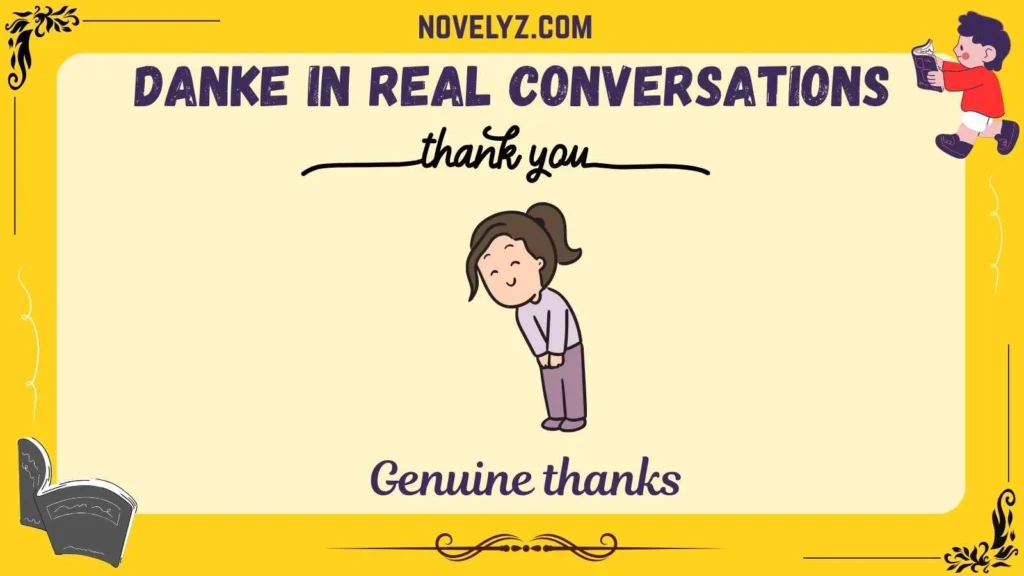
You: “Danke! lifesaver”
→ Meaning: Genuine thanks
Example 2
Gamer: “I revived you twice bro”
You: “danke lol”
→ Meaning: Casual appreciation, slightly playful
Example 3
Friend: “I ate your snacks”
You: “danke…”
→ Meaning: Sarcasm (you’re annoyed)
Example 4
Crush: “I like your style”
You: “danke :)”
→ Meaning: Soft, slightly flirty response
Example 5
Discord chat: “Here’s the link”
User: “danke!”
→ Meaning: Quick, informal thanks
Common Mistakes & Misunderstandings
Even though it’s simple, people still misuse it.
1. Thinking it has a hidden slang meaning
It doesn’t. “Danke” just means thank you. No secret code.
2. Using it in serious or formal situations
Avoid it in:
- Work emails
- Academic writing
- Professional conversations
3. Misreading sarcasm
“Danke…” can actually mean:
- Annoyance
- Disappointment
- Passive frustration
4. Cultural confusion
Some people may not recognize it at all, especially:
- Older users
- Non-European audiences
How to Respond When Someone Sends You “Danke”
If someone says “danke”, keep your reply simple.
Safe responses:
- “No problem”
- “Anytime”
- “You’re welcome”
- “np” (casual)
Casual chat replies:
- “got you”
- “all good”
- “no worries”
If you’re unsure:
You don’t need to overthink it. Just respond like normal gratitude.
When NOT to use it back:
- If the conversation is formal
- If the other person doesn’t use slang or mixed language
Is “Danke” Still Used in 2026?
Yes—but in a specific way.
Current relevance:
- Still popular in gaming and Discord culture
- Used by Gen Z more than Millennials
- Common in multilingual friend groups
Trend status:
- Not trending—but consistently used
- Feels natural, not outdated
Where it’s most common now:
- Gaming chats
- Meme communities
- Casual DMs
It’s part of a bigger trend where people mix languages casually online.
Related Slangs & Abbreviations
If you’re learning danke meaning slang, these related terms help build context:
- Ty → Short for “thank you”
- Thx → Informal thanks
- Tysm → Thank you so much
- Gracias → Spanish version of thanks (also used casually online)
- Merci → French “thank you,” sometimes used stylistically
- Appreciate it → More expressive gratitude
These variations show how internet culture blends languages for style and tone.
FAQs :
What does “danke” mean in text?
It means “thank you.” It’s the German word used casually in online conversations.
Is “danke” slang or just a normal word?
It’s originally a normal German word, but online it functions like casual slang.
Can I use “danke” in English conversations?
Yes, in informal chats. Avoid using it in professional or formal settings.
Is “danke” rude or sarcastic?
Not by default. But if written as “danke…” it can sound sarcastic depending on context.
Why do people use “danke” instead of “thanks”?
Mostly for style, uniqueness, or because they’re used to multilingual chat culture.
Conclusion :
Now you know that “danke” simply means “thank you,” but how it feels depends on tone, context, and platform. It’s a small word that reflects a bigger trend people mixing languages naturally in digital conversations.
If you’re a beginner, don’t stress about using it perfectly. Just understand the vibe, and you’ll fit right in.
The more you see it in real chats, the more natural it will feel.
What’s your favorite chat abbreviation? Drop it in the comments!

I am a curious writer at Novelyz who loves exploring meanings behind words, emotions, and everyday expressions. Through simple and engaging explanations, I help readers understand language in a clear, relatable way.