If you’ve seen someone type “AF meaning” or just “AF” in a message and felt confused, you’re not alone.
In modern texting culture, especially across Gen Z and Millennial chats, AF is one of the most widely used slang intensifiers but also one of the most misunderstood.
People search this term because it shows up everywhere: TikTok comments, Instagram captions, Snapchat streak chats, Discord servers, gaming lobbies, and even dating apps. Yet its meaning changes slightly depending on tone and context.
In this updated 2026 guide, we break down exactly what AF means in chat, how it’s used, and how you can confidently understand (and use) it like a native internet user.
What Does “AF” Mean in Chat or Text?
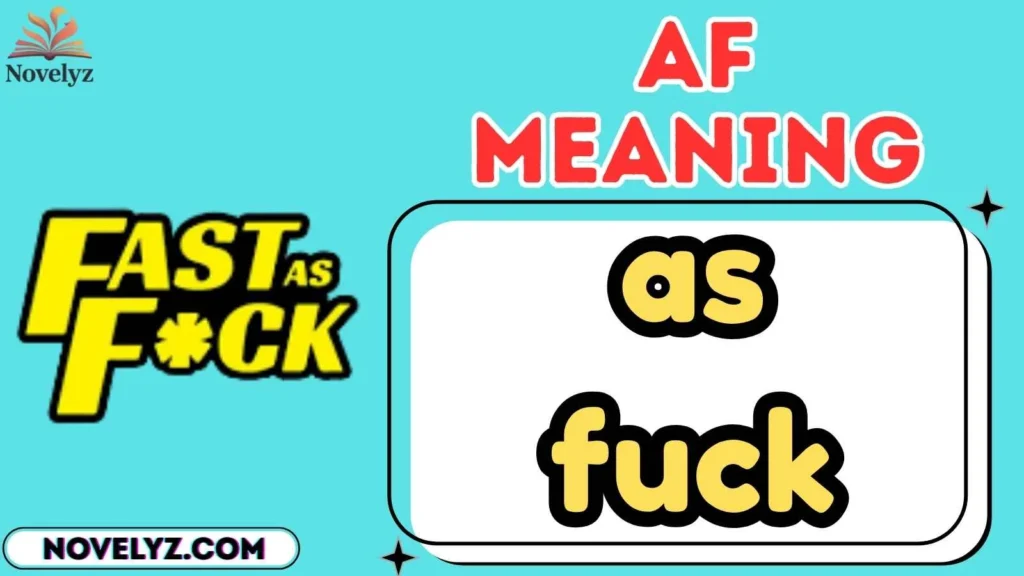
The most common meaning of AF in texting and slang is:
AF = “As F*” (used to intensify an adjective or feeling)**
It is used to exaggerate or emphasize something in a strong, casual way.
For example:
- “I’m tired AF” = extremely tired
- “She’s cute AF” = very cute
- “That game was fun AF” = super fun
Important Context:
AF is informal and often considered mildly vulgar because it references a censored swear word. However, in modern internet culture, it’s used casually and is widely accepted in memes, captions, and friendly chats.
Origin & Evolution
AF became popular through early internet forums, texting culture, and later exploded on Twitter, Instagram, and meme culture. Over time, it shifted from edgy slang to mainstream internet language.
Today, it is less shocking and more of a standard intensifier in online communication.
How People Use “AF” in Real Conversations
AF is everywhere in digital communication because it’s short, expressive, and emotionally powerful.
Common platforms where AF is used:
- Text messaging (iMessage, WhatsApp, SMS)
- Instagram captions and comments
- Snapchat streak conversations
- Discord gaming chats
- TikTok comments and captions
- Reddit threads and memes
- Dating apps (Tinder, Bumble, etc.)
Tone and intent:
AF can feel:
- Casual: “busy AF”
- Funny: “clumsy AF”
- Sarcastic: “rich AF (yeah right)”
- Emotional: “sad AF”
- Excited: “happy AF”
It depends entirely on context and the words around it.
Real-Life Examples of “AF” in Text Messages
Here’s how AF actually shows up in real chats:
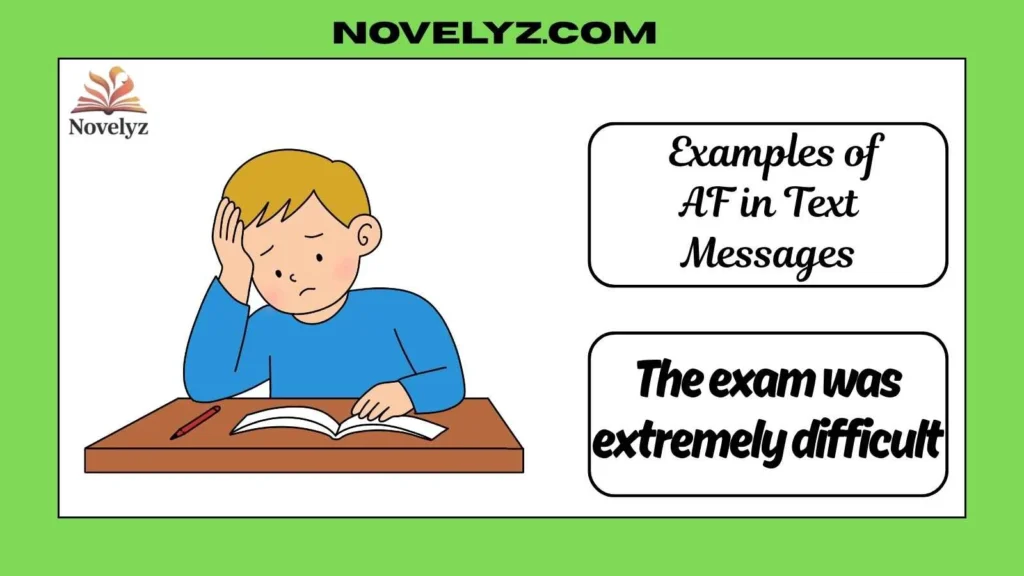
Example 1:
Friend A: “How was the exam?”
Friend B: “Hard AF”
Meaning: The exam was extremely difficult.
Example 2:
“This pizza is good AF.”
Meaning: The pizza tastes amazing.
Example 3:
“I’m bored AF rn.”
Meaning: The person is very bored at the moment.
Example 4 (Sarcastic tone):
“He’s smart AF…” (with context of a mistake)
Meaning: Actually sarcastic, implying the opposite.
Example 5 (Social media caption):
“Weekend mood: relaxed AF”
Meaning: Very relaxed, enjoying the weekend.
In all cases, AF works as a strong emotional amplifier.
Common Mistakes & Misunderstandings
Many beginners misread or misuse AF, leading to confusion or awkward moments.
Common mistakes include:
- Thinking AF is a formal abbreviation (it’s not)
- Using it in professional or academic emails
- Assuming it has only one meaning in all contexts
- Not understanding its tone (serious vs sarcastic)
Cultural misunderstandings:
- Some non-native speakers interpret AF literally instead of slang
- Older audiences may see it as inappropriate or offensive
- Some users confuse it with other abbreviations like “A.F.” (Air Force)
Using AF in the wrong setting can feel unprofessional or too casual.
How to Respond When Someone Sends You “AF”
If someone uses AF in a message, your response depends on context.
Safe responses:
- “Same lol”
- “Facts”
- “I feel that”
- “Relatable”
- “Same here AF” (if you’re comfortable using slang)
If you’re confused:
- “What do you mean by AF here?”
- “Lmao explain that 😂”
When not to use it back:
- Formal conversations
- Workplace chats
- Talking to people who don’t use slang
- Academic or professional settings
The key is matching tone, not forcing slang.
Is “AF” Still Used in 2026?
Yes—AF is still widely used in 2026, but its usage has evolved.
Current trends:
- Still popular among Gen Z and younger Millennials
- Common in memes and TikTok captions
- Slightly less “edgy” than before
- Replaced sometimes by softer versions like “super” or “so”
Generational difference:
- Gen Z: Uses AF casually and humorously
- Millennials: Still use it, but slightly less frequently
- Older users: Rare or avoided
Where it’s strongest today:
- Meme culture
- Short-form video platforms
- Gaming chats
- Casual texting
AF isn’t fading—it’s just becoming a standard internet expression.
Related Slangs & Abbreviations
Here are similar terms often confused with AF:
- ASAP – As soon as possible (not slang intensity, but urgency)
- FR – For real (agreement or emphasis)
- IDK – I don’t know (common chat abbreviation)
- IKR – I know right (agreement)
- SMH – Shaking my head (disapproval)
- OMG – Oh my God (reaction/emotion)
- TBH – To be honest (truthful statement)
These often appear alongside AF in casual conversations.
FAQs:
What does AF mean in text messages?
AF means “As F***” and is used to strongly emphasize an adjective or feeling.
Is AF a bad word?
It can be mildly offensive because it includes a swear word, but it’s widely used informally online.
Can I use AF in professional chats?
No, it’s not appropriate for formal or workplace communication.
Why do people use AF instead of just “very”?
Because AF sounds more expressive, emotional, and natural in internet slang.
Is AF still popular in 2026?
Yes, it’s still commonly used in texting, memes, and social media posts.
Conclusion:
Understanding AF meaning in chat and text is essential for navigating modern internet language.
It’s a simple but powerful slang term that adds emotion, intensity, and personality to messages.
Once you recognize it, you’ll start seeing it everywhere from casual conversations to viral social media posts.
The key is remembering that AF is informal, expressive, and context driven.
With this knowledge, you can now read and use it confidently without confusion.
What’s your favorite chat abbreviation? Drop it in the comments!

I am a curious writer at Novelyz who loves exploring the true meanings behind words, phrases, and modern expressions. My goal is to explain language in a simple, clear way that feels real, relatable, and easy for everyone to understand.