If you’ve seen the word troubadour online and felt confused, you’re not alone. It’s not typical Gen Z slang like “rizz” or “mid,” but it does show up in modern conversations especially in creative, romantic, or slightly poetic contexts.
Understanding the troubadour meaning matters because internet language isn’t just abbreviations anymore.
People mix old words with modern tone, memes, and vibes. And this is one of those words that can sound deep… or just plain confusing.
Let’s break it down in the simplest, real-world way.
What Does “Troubadour” Mean in Chat or Text?
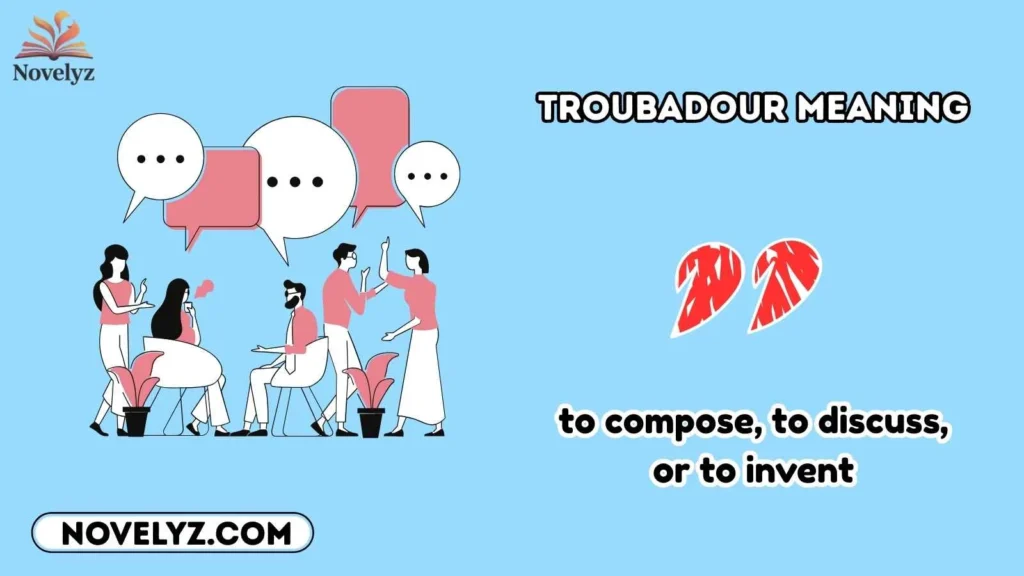
Troubadour originally refers to a poet or musician from medieval times who wrote songs about love and chivalry.
In modern chat or text, the meaning has evolved. Today, it usually means:
- Someone who expresses emotions through words, music, or storytelling
- A romantic or poetic person
- Someone who’s always “in their feelings” and sharing them creatively
Simple Definition (Modern Use):
Troubadour = a poetic, expressive, often romantic storyteller (sometimes used playfully or ironically)
How the Meaning Evolved:
- Old meaning: Medieval singer/poet
- Early modern use: Artistic or lyrical person
- Internet era (2026):
Someone who:- Writes deep captions
- Sends long emotional texts
- Acts poetic about love or life
It can be used seriously, jokingly, or even sarcastically depending on the tone.
How People Use “Troubadour” in Real Conversations
You won’t see “troubadour” in basic texting like “LOL” or “BRB.” It’s more niche and shows up in specific vibes.
Common Platforms:
- Instagram captions (deep or aesthetic posts)
- Discord (creative or artsy communities)
- Reddit (literary or storytelling threads)
- Dating apps (to describe personality)
- Texting (usually joking or teasing)
When It Feels Natural:
- Talking about someone who writes poetry or songs
- Describing a “romantic type”
- Playfully teasing someone being dramatic
When It Feels Awkward:
- Casual chats with friends who don’t use expressive language
- Fast-paced conversations (it’s too “heavy” for quick replies)
Tone & Intent:
- Romantic: “He’s such a troubadour, always writing songs for her.”
- Playful: “Okay troubadour, relax with the deep captions.”
- Sarcastic: “Bro thinks he’s a whole troubadour now.”
It’s all about delivery.
Real-Life Examples of “Troubadour” in Text Messages
Here’s how it actually shows up in chats:
1. Romantic Context
- “He wrote her a whole paragraph at 2am… man turned into a troubadour overnight.”
👉 Meaning: He’s being deeply emotional and poetic.
2. Playful Teasing
- “Why you typing essays again? You a troubadour now?”
👉 Meaning: You’re being extra expressive.
3. Social Media Caption Reaction
- “This caption is giving full troubadour energy.”
👉 Meaning: It sounds poetic and artistic.
4. Dating App Bio
- “Part-time gym guy, part-time troubadour.”
👉 Meaning: Someone who mixes masculinity with emotional/artistic depth.
5. Sarcastic Use
- “He sent one sad message and thinks he’s a troubadour.”
👉 Meaning: Mocking someone for being dramatic.
Common Mistakes & Misunderstandings
1. Thinking It’s Slang Like “LOL”
It’s not a quick abbreviation. It’s a full word with a deeper tone.
2. Using It in the Wrong Context
Saying “troubadour” in casual or fast chats can feel:
- Too formal
- Too dramatic
3. Misreading the Tone
Someone calling you a troubadour could mean:
- A compliment (creative, expressive)
- A joke (you’re being extra)
Context matters.
4. Confusing It With Other Terms
It’s sometimes mixed up with:
- Poet
- Musician
- “Simp” (incorrect but sometimes overlapping in jokes)
How to Respond When Someone Sends You “Troubadour”
Not sure how to reply? Here are safe and natural options:
If It’s a Joke:
- “Haha chill, just had thoughts”
- “Let me be dramatic in peace”
It’s a Compliment:
- “I’ll take that”
- “Guess I’ve got a poetic side”
If You’re Confused:
- “Wait what do you mean by troubadour?”
- Totally fine to ask—most people don’t use it daily.
When NOT to Use It Back:
- If you don’t fully understand the tone
- If the conversation is serious or sensitive
Is “Troubadour” Still Used in 2026?
Yes—but it’s not mainstream slang.
Current Status:
- Gen Z: Uses it ironically or aesthetically
- Millennials: Use it more genuinely (especially creative types)
Where It’s Most Common:
- Creative communities
- Music and poetry spaces
- Aesthetic social media posts
Trend Direction:
- Not fading—but staying niche and expressive
- Often used for “vibe-based” communication rather than quick texting
Related Slangs & Abbreviations
Here are similar or connected terms you might see:
- Poetic – Someone expressive or deep with words
- Hopeless romantic – Always focused on love
- In their feelings – Emotional or reflective
- Main character energy – Acting like the star of a story
- Simp – Someone overly attentive (often jokingly used)
These help you understand the emotional and expressive side of internet language.
FAQs:
What does “troubadour” mean in text?
It means someone who is expressive, poetic, or romantic—often used jokingly or playfully.
Is “troubadour” a slang word?
Not exactly. It’s an old word that’s been adapted into modern online language.
Is it a compliment or an insult?
It can be both. It depends on tone—either praising creativity or teasing someone for being dramatic.
Do people actually use “troubadour” in chats?
Yes, but mostly in niche or creative conversations, not everyday texting.
Can I use “troubadour” in casual messages?
You can, but it might sound too formal unless used jokingly.
Conclusion:
The troubadour meaning in today’s chat culture blends history with modern expression. It’s not your typical slang it’s more about vibe, personality, and emotional tone.
If someone calls you a troubadour, don’t overthink it. You’re either:
- Being poetic
- Being dramatic
- Or just expressing yourself a little more than usual
And honestly, that’s not a bad thing.
What’s your favorite chat abbreviation? Drop it in the comments!

I am a curious writer at Novelyz who loves exploring meanings behind words, emotions, and everyday expressions. Through simple and engaging explanations, I help readers understand language in a clear, relatable way.