You’ve probably seen the word subordinate and paused.
Is it an insult? A job title? A power thing? Or just formal English?
People search subordinate meaning because the word shows up everywhere — at work, in school, in legal writing, and even in online conversations where tone matters more than grammar.
This guide breaks it down simply, clearly, and honestly, without dictionary fluff. By the end, you’ll know exactly what subordinate means, how people actually use it today, and when it can sound normal vs uncomfortable.
What Does “Subordinate” Mean?
At its core, subordinate means:
Someone or something that is lower in rank, authority, or importance compared to another.
That’s it. No hidden meaning — but context changes how it feels.
The three most common meanings
- Workplace meaning (most common)
A subordinate is a person who reports to someone else.- Manager → employee
- Team lead → junior staff
- Grammar meaning (academic)
A subordinate clause depends on a main clause.- “Because I was tired” = subordinate clause
- General meaning
Something less important or secondary.- “Money is subordinate to health.”
How the meaning has evolved
Historically, subordinate was neutral and formal.
In modern culture, especially online, it can feel cold, power-heavy, or dismissive if used carelessly.
That’s why people get confused.
How People Use “Subordinate” in Real Conversations
Unlike internet slang, subordinate is not casual chat language. It shows up more in:
- Work emails
- HR documents
- Academic writing
- Legal or formal discussions
- Serious Reddit threads
Where it feels normal
- Professional settings
- Clear hierarchy discussions
- Training or leadership content
Example:
“Each manager is responsible for their subordinates.”
Where it feels awkward or rude
- Texting friends
- Dating apps
- Casual Discord chats
- Social media arguments
Example:
“You’re my subordinate.”
That sounds controlling, even if technically correct.
Tone matters more than the word
In modern digital language, subordinate implies power.
People prefer softer alternatives unless hierarchy is required.
Real-Life Examples of “Subordinate” in Use
Example 1: Workplace email
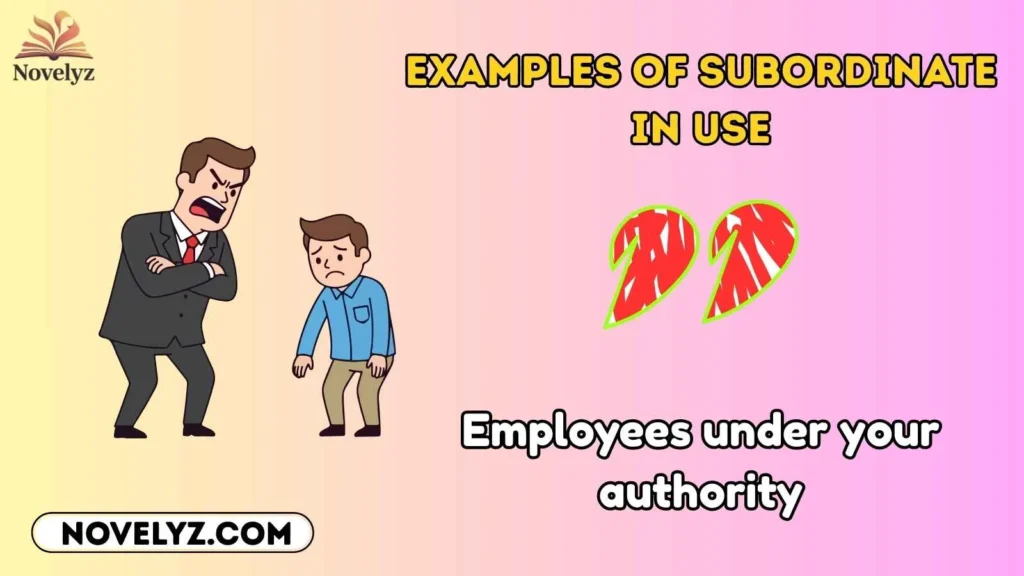
“Please ensure all subordinates complete the training by Friday.”
Meaning: Employees under your authority
Tone: Formal, neutral
Example 2: Academic writing
“The subordinate clause explains the reason.”
Meaning: Grammar-related
Tone: Technical, neutral
Example 3: Online argument
“You’re just a subordinate, stay in your place.”
Meaning: Power insult
Tone: Aggressive, disrespectful
Example 4: Self-reflection
“My ego should be subordinate to learning.”
Meaning: Less important than something else
Tone: Thoughtful
Context decides everything.
Common Mistakes & Misunderstandings
1. Thinking it’s the same as “assistant”
A subordinate is not always an assistant.
They could be skilled, experienced, and respected — just lower in hierarchy.
2. Using it in casual conversation
Calling someone a subordinate outside formal settings can sound rude or outdated.
3. Confusing dominance with disrespect
Being subordinate doesn’t mean weak, inferior, or unimportant.
4. Mixing grammar and social meanings
A subordinate clause ≠ a subordinate person.
How to Respond When Someone Uses “Subordinate”
If it’s work-related
Respond normally.
“Understood. I’ll inform my team.”
If it feels uncomfortable
You can redirect politely.
“Let’s keep this professional.”
If you’re unsure what they mean
Ask for clarity.
“Do you mean in terms of reporting structure?”
When not to repeat it
Avoid using the word back unless the context is clearly formal.
Is “Subordinate” Still Used in 2026?
Yes — but mostly in formal contexts.
Modern usage trends
- Gen Z: Rarely uses it in speech or chat
- Millennials: Uses it at work, avoids it socially
- Corporate / legal: Still very common
- Internet slang: Not slang at all
In casual digital culture, people prefer:
- “Team member”
- “Direct report”
- “Junior”
- “Staff”
The word isn’t disappearing — it’s just staying in its lane.
Related Terms People Confuse With “Subordinate”
- Superior – Someone above in rank
- Manager – A role, not a power label
- Employee – Employment status, not hierarchy
- Assistant – Task-based, not authority-based
- Junior – Informal, softer alternative
Understanding these differences avoids awkward communication.
FAQs:
What does subordinate mean in simple words?
It means someone or something that is lower in rank or importance than another.
Is subordinate a negative word?
Not by definition, but it can sound negative if used casually or aggressively.
Can you call someone a subordinate directly?
Only in formal or professional contexts. Otherwise, it may feel disrespectful.
What is subordinate meaning in grammar?
A subordinate clause depends on a main clause to make sense.
Is subordinate still used in modern English?
Yes, but mostly in professional, academic, or legal settings.
Final Thoughts:
If you were confused by subordinate meaning, you’re not alone.
It’s a formal word living in a casual internet world — and that clash causes confusion.
The key takeaway:
- The word is neutral, but
- The context and tone decide how it lands
Use it when structure matters. Avoid it when connection matters.
Once you understand that, you’ll never misread it again.
What’s a word you’ve seen online that felt confusing or uncomfortable at first? Drop it in the comments — let’s decode it together.

I am a curious writer at Novelyz who loves exploring meanings behind words, emotions, and everyday expressions. Through simple and engaging explanations, I help readers understand language in a clear, relatable way.