If you’ve seen someone describe a message, moment, or conversation as “solemn” and felt unsure what they really meant, you’re not alone.
People search for solemn meaning because the word feels formal, emotional, and slightly out of place in modern chat culture. Yet it still shows up—in texts, Discord servers, captions, and serious online conversations.
Understanding what solemn actually means (and how people use it today) helps you avoid awkward replies, misreading tone, or sounding unintentionally cold.
This guide breaks it down in plain English, with real examples and modern context—updated for 2026.
What Does “Solemn” Mean in Chat or Text?
Solemn means serious, quiet, and emotionally heavy.
When someone uses it in chat, they’re signaling that the moment isn’t casual or playful.
In simple terms, solemn suggests:
- Deep seriousness
- Respect or gravity
- Emotional weight
- No jokes or sarcasm intended
Modern Chat Meaning (Not a Dictionary Definition)
In online conversations, calling something solemn usually means:
“This matters. Please take it seriously.”
It’s often used when people want to slow the conversation down and set a serious tone.
How the Meaning Has Evolved
- Originally: Used in formal speeches, ceremonies, religious or legal settings
- Now: Still formal, but occasionally used online to intentionally sound serious or emotionally grounded
Unlike slang that becomes playful over time, solemn has stayed serious—which is why it stands out in casual chats.
How People Use “Solemn” in Real Conversations
You won’t see solemn used casually like “lol” or “vibes,” but it does appear in specific online spaces.
Common Platforms Where It Shows Up
- Texting: Serious personal conversations
- Instagram captions: Memorials or reflective posts
- Discord: Community announcements or apologies
- Forums & Reddit: Emotional or sensitive discussions
- Gaming chats: Rare, but used after real-life loss or conflict
- Dating apps: Occasionally to signal emotional depth (or seriousness)
When It Feels Natural vs. Awkward
Natural when:
- Talking about loss, grief, or respect
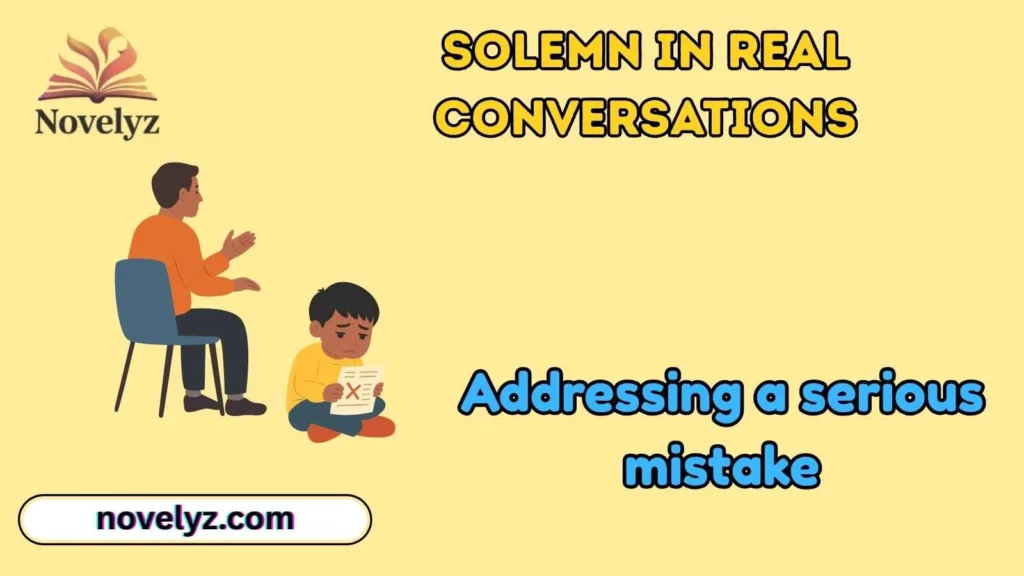
- Addressing a serious mistake
- Making a heartfelt promise
- Setting emotional boundaries
Awkward when:
- Used in jokes or memes
- Dropped into casual banter
- Used sarcastically (often misread)
Tone & Intent
Using solemn signals:
- Calm seriousness
- Emotional maturity
- Respectful distance
It’s never flirty, rarely casual, and almost never ironic—unless someone is being intentionally dramatic.
Real-Life Examples of “Solemn” in Text Messages
Example 1
“I want to have a solemn conversation about what happened.”
What it means:
This isn’t small talk. The sender wants a serious, respectful discussion.
Example 2
“The chat went quiet after the announcement. It felt solemn.”
What it means:
Everyone understood the emotional weight of the moment.
Example 3
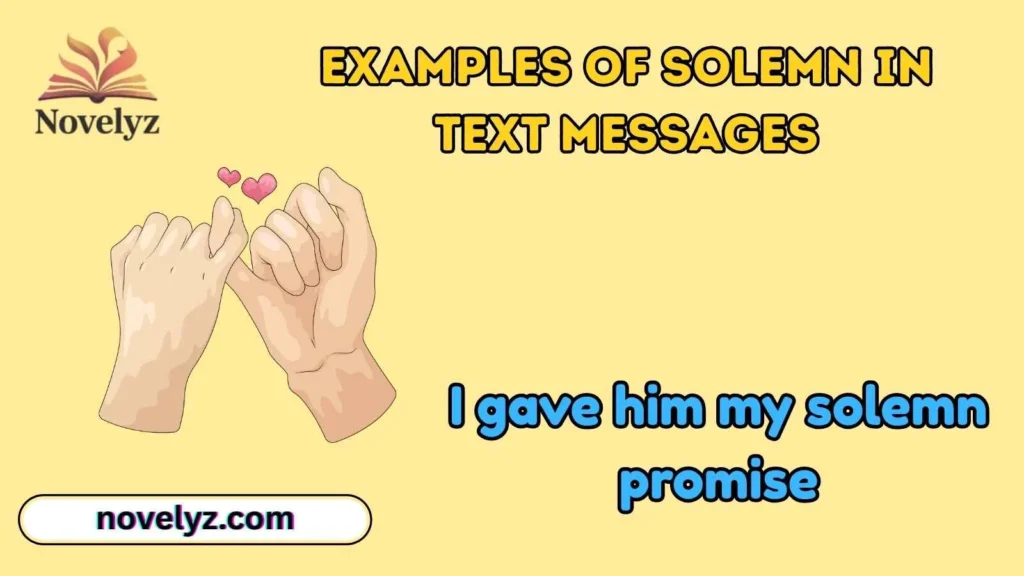
“I gave him my solemn promise.”
What it means:
The promise is meaningful and not meant lightly.
Example 4
“Not trying to be dramatic, but this is a solemn moment for me.”
What it means:
The sender is asking for emotional space and understanding.
Common Mistakes & Misunderstandings
1. Confusing Solemn With “Sad”
Solemn doesn’t always mean sad—it means serious and respectful.
2. Using It Casually
Saying something like:
“This pizza decision is solemn.”
…can sound awkward or unintentionally sarcastic.
3. Misreading Tone Online
Because text lacks emotion, solemn messages can feel cold or distant if you don’t recognize the intent.
4. Generational Confusion
Younger users may see solemn as overly formal, while older users see it as emotionally appropriate.
How to Respond When Someone Sends You “Solemn”
If someone uses solemn, match their seriousness.
Safe Responses for Beginners
- “I understand. I’m listening.”
- “I appreciate you taking this seriously.”
- “Thank you for being honest with me.”
When to Ask for Clarification
If you’re unsure:
“Do you want to talk more about it?”
This keeps the tone respectful without sounding dismissive.
When Not to Use It Back
- If you’re unsure about the emotional weight
- If the conversation shifts back to casual
- If it feels forced or unnatural
Is “Solemn” Still Used in 2026?
Yes—but selectively.
Current Usage Trends
- Gen Z: Uses it rarely, mostly in meaningful or intentional moments
- Millennials: More comfortable using it seriously
- Overall: Not trending slang, but still relevant
Solemn hasn’t faded—it’s just reserved for moments that matter.
You’ll see it more in:
- Thoughtful posts
- Serious announcements
- Emotionally mature conversations
Related Slangs & Commonly Confused Terms
- Serious: More casual, less emotional weight
- Deep: Emotional but less formal
- Heavy: Informal version of solemn
- Sincere: Focuses on honesty rather than tone
- Respectful: Often overlaps but lacks emotional depth
These terms often appear in the same conversations but carry different emotional signals.
FAQs:
What does “solemn” mean in text messages?
It means the sender is being serious, respectful, and emotionally intentional.
Is “solemn” a slang word?
No. It’s a traditional word that’s occasionally used in modern chat for emphasis.
Can “solemn” be used sarcastically?
Rarely. Sarcasm often gets misread when this word is used.
Is “solemn” too formal for texting?
It depends on the context. For serious moments, it fits perfectly.
Do people still use “solemn” online in 2026?
Yes, but only when the situation truly calls for it.
Final Thoughts:
The solemn meaning hasn’t changed much—but how we use it has.
In a fast, casual internet world, solemn stands out as a signal of seriousness, respect, and emotional weight. When you see it, slow down, read carefully, and respond thoughtfully.
Once you understand it, you’ll never misread it again.
What’s your favorite chat abbreviation or word that confused you at first? Drop it in the comments!

I am a curious writer at Novelyz who loves exploring the true meanings behind words, phrases, and modern expressions. My goal is to explain language in a simple, clear way that feels real, relatable, and easy for everyone to understand.