If you’ve seen someone say they were “obliterated” in a text, TikTok comment, or Discord chat and thought, “Wait… destroyed how?” you’re not alone.
People search obliterated meaning because the word has taken on a very different vibe online than it has in dictionaries or school essays.
In modern chat culture, it’s rarely literal. It’s expressive. Dramatic. Sometimes funny. Sometimes concerning. And context matters a lot.
This guide breaks down exactly what “obliterated” means in slang, how people actually use it in real conversations, and how to understand (or respond) without feeling out of the loop.
Everything here is updated for 2026 and based on how people genuinely talk online today.
What Does “Obliterated” Mean in Chat or Text?
In modern slang, “obliterated” usually means extremely affected by something — most commonly alcohol, exhaustion, embarrassment, or a heavy emotional or physical state.
In simple terms:
Obliterated = completely wiped out, overwhelmed, or gone beyond normal limits
It’s rarely literal destruction. It’s exaggeration for effect.
Common slang meanings of “obliterated”:
- Very drunk or high
- Totally exhausted
- Emotionally overwhelmed
- Embarrassed beyond recovery
- Destroyed in a game or argument
How the meaning evolved
Originally, obliterated meant completely destroyed or erased. Online culture turned it into a hyperbolic status word — similar to “wrecked,” “cooked,” or “done for.”
Social media, gaming, and meme culture accelerated this shift. Saying “I’m tired” isn’t expressive enough anymore. Saying “I’m obliterated” hits harder.
How People Use “Obliterated” in Real Conversations
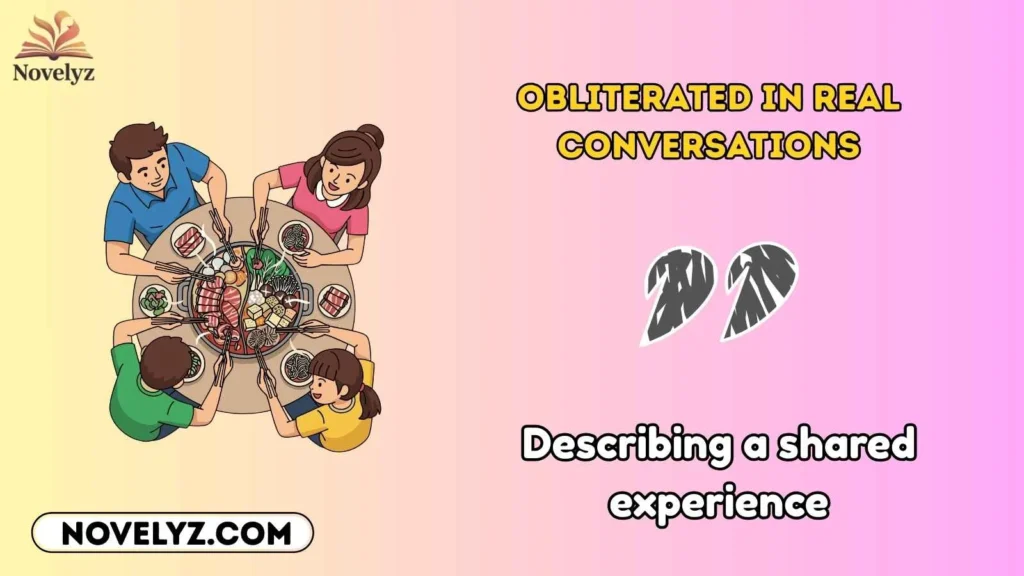
You’ll see “obliterated” across multiple platforms, but the tone changes depending on where it’s used.
Where it’s commonly used
- Texting: Casual, exaggerated updates
- Instagram & TikTok: Story captions or comments
- Snapchat: After nights out or long days
- Discord & gaming chats: Losing badly or mental burnout
- Dating apps: Usually humorous or self-deprecating
- Forums & Reddit: Storytelling, often dramatic
Tone & intent
“Obliterated” is usually:
- Casual
- Dramatic (on purpose)
- Often humorous
- Sometimes a soft warning (“I’m not okay”)
It works best when:
- Talking to peers
- Joking about extremes
- Describing a shared experience
It feels awkward when:
- Used in professional chats
- Sent to someone older or unfamiliar with slang
- Used too seriously without context
Real-Life Examples of “Obliterated” in Text Messages
Here’s how it actually shows up in chats — and what it really means.
“I’m absolutely obliterated after that shift.”
→ Completely exhausted, mentally and physically.
“He was obliterated by midnight.”
→ Very drunk, possibly unable to function.
“That boss fight obliterated me.”
→ Lost badly in a game, not emotionally destroyed.
“I sent the wrong screenshot. I’m obliterated.”
→ Deep embarrassment, dramatic but playful.
“Gym + no sleep = obliterated.”
→ Overworked, drained, running on fumes.
Context tells you whether it’s serious or joking — not the word itself.
Common Mistakes & Misunderstandings
1. Taking it literally
New learners sometimes think something actually terrible happened. Most of the time, it’s exaggeration.
2. Confusing it with formal usage
In essays or news, obliterated still means destroyed. In chat, it almost never does.
3. Misreading tone
Someone saying they’re “obliterated” might be:
- Laughing
- Complaining lightly
- Asking for sympathy
- Or quietly overwhelmed
If unsure, check the surrounding messages.
4. Using it with the wrong audience
It can sound strange or inappropriate in:
- Work emails
- School assignments
- Serious discussions
How to Respond When Someone Sends You “Obliterated”
If you’re not sure how to reply, keep it simple.
Safe responses
- “Rough day?”
- “Yeah, that’ll do it.”
- “Rest up.”
- “Been there.”
When to ask for clarification
If the message feels serious or concerning:
- “Physically or emotionally?”
- “You good?”
When not to use it back
- If you don’t understand the context
- In professional or formal chats
- When the other person seems genuinely distressed
Is “Obliterated” Still Used in 2026?
Yes — but with nuance.
Current usage trends
- Gen Z: Uses it ironically, humorously, or in gaming contexts
- Millennials: More likely to use it for drinking or exhaustion
- Social platforms: Still common, especially in captions and comments
It hasn’t disappeared, but it competes with newer slang like cooked, fried, or done for. “Obliterated” survives because it’s versatile and expressive.
Related Slangs & Abbreviations
If you understand “obliterated,” these often show up nearby:
- Cooked – mentally or emotionally done
- Wiped – physically exhausted
- Fried – mentally overloaded
- Gone – drunk or checked out
- Destroyed – defeated (often in games)
- Down bad – emotionally struggling
Knowing these helps you read tone faster in modern chat.
FAQs:
What does “obliterated” mean in text slang?
It usually means extremely drunk, exhausted, overwhelmed, or emotionally done — not literal destruction.
Is “obliterated” always about alcohol?
No. Alcohol is common, but it’s also used for exhaustion, embarrassment, or losing badly.
Is “obliterated” negative or funny?
Often both. It’s usually exaggerated and lighthearted unless paired with serious context.
Can I use “obliterated” at work?
Not recommended. It’s informal and slang-heavy.
Is “obliterated” Gen Z slang?
It’s used by both Gen Z and Millennials, but Gen Z tends to use it more ironically.
Final Thoughts:
If you see “obliterated” in a message, don’t panic. In modern slang, it’s rarely literal and usually expressive, dramatic, or humorous. Once you understand the tone and context, it becomes easy to read — and even easier to respond naturally.
Modern chat language moves fast, but you’re not behind. You’re just learning the patterns.
What’s your favorite chat abbreviation or slang word? Drop it in the comments!

I am a curious writer at Novelyz who loves exploring the true meanings behind words, phrases, and modern expressions. My goal is to explain language in a simple, clear way that feels real, relatable, and easy for everyone to understand.