If you’ve seen someone described as “meek” in a message or post and felt unsure what it really means, you’re not alone.
The phrase “meek meaning” is searched a lot because it shows up in texts, captions, and even memes but it’s not always used in a strict dictionary way.
In modern chat culture, understanding words like meek helps you read tone correctly, avoid awkward replies, and keep up with how people actually talk online. This guide breaks it down in the simplest, real-world way updated for 2026.
What Does “Meek” Mean in Chat or Text?
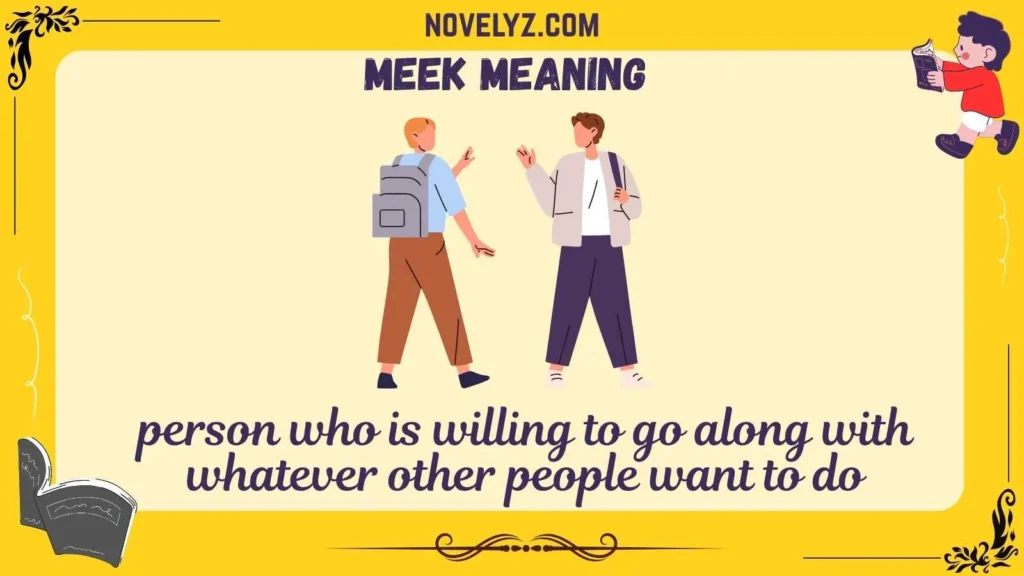
Meek means someone who is quiet, shy, or not confident in expressing themselves.
In chat or slang, it usually describes a person who:
- Avoids conflict
- Doesn’t speak up much
- Seems soft, passive, or overly polite
Simple meaning:
“Meek” = quiet + shy + low confidence (in most contexts)
Origin & evolution:
- The word comes from old English and was originally used in religious or moral contexts (like being humble or gentle).
- Today, in texting and online spaces, it’s more casual and often slightly negative.
Modern twist:
Depending on context, meek can mean:
- Neutral: “Just a quiet person”
- Negative: “Too weak or afraid to speak up”
- Rarely positive: “Soft, calm, and humble”
How People Use “Meek” in Real Conversations
You’ll see meek across different platforms, but the tone changes slightly depending on where it’s used.
Common platforms:
- Texting (friends, casual chats)
- Instagram comments or captions
- Snapchat conversations
- Discord servers and gaming chats
- Reddit threads and forums
- Dating apps (sometimes describing personality)
How it feels in context:
Natural use:
- Describing someone’s personality
- Talking about behavior in social situations
Awkward use:
- Calling someone meek directly (can feel insulting)
- Using it in a flirty or playful context (rarely fits)
Tone & intent:
- Casual: “He’s kinda meek in real life”
- Slightly critical: “Stop being so meek, speak up”
- Observational: “She seems quiet, maybe just meek”
Real-life insight:
In modern chat culture, calling someone meek often hints at lack of confidence, not just being quiet. That’s why it can come off as judgmental if used carelessly.
Real-Life Examples of “Meek” in Text Messages
Here’s how people actually use it in chats:
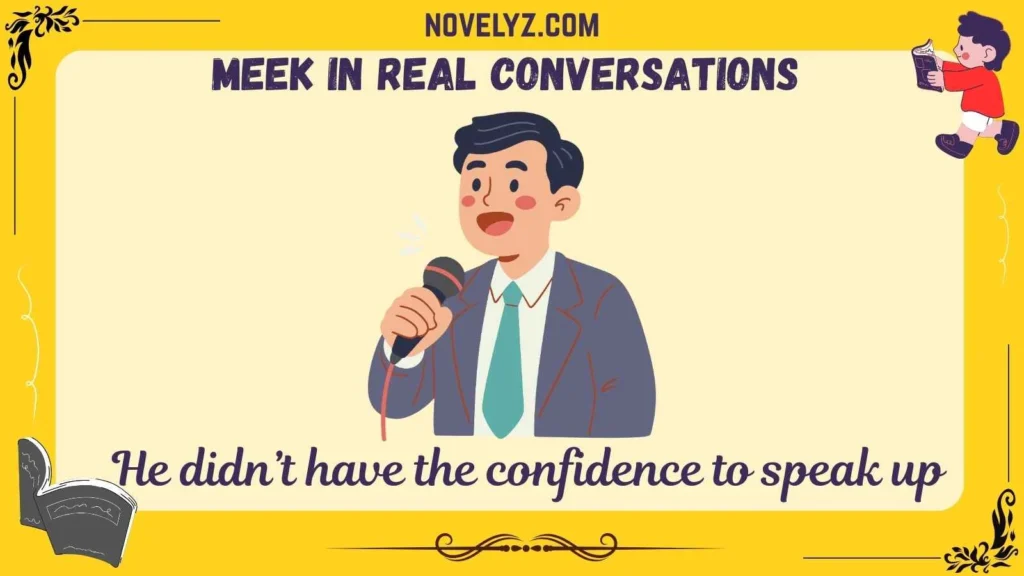
- “Bro was too meek to say anything in the meeting”
→ Meaning: He didn’t have the confidence to speak up - “She’s sweet but kinda meek”
→ Meaning: She’s nice but very shy or reserved - “Why you acting so meek all of a sudden?”
→ Meaning: Why are you being unusually quiet or passive - “I thought he’d argue back but he stayed meek”
→ Meaning: He chose not to fight or respond
Context matters:
The same word can feel:
- Neutral → describing personality
- Negative → criticizing someone
- Supportive (rare) → pointing out gentleness
Common Mistakes & Misunderstandings
1. Thinking it always means “kind”
Not exactly. Meek can include kindness, but it usually leans more toward lack of confidence.
2. Using it as a compliment
In most modern chats, calling someone meek is not a compliment.
3. Confusing it with “introvert”
- Introvert = prefers being alone
- Meek = lacks confidence or assertiveness
They are not the same.
4. Cultural misunderstandings
In some cultures, being quiet is respected. But in online slang, meek often sounds like criticism.
5. Tone issues
Text has no voice tone—so “you’re meek” can feel harsher than intended.
How to Respond When Someone Sends You “Meek”
If someone uses meek in a message, your response depends on context.
Safe responses:
- “What do you mean by meek?”
- “You mean quiet or just chill?”
- “I’m just not trying to argue lol”
If it feels negative:
- “I just don’t like unnecessary drama”
- “I speak when it matters”
If it’s casual:
- “Yeah I’m not the loud type”
- “Depends on the situation honestly”
When NOT to use it back:
Avoid calling others meek unless you know they won’t take it personally.
Is “Meek” Still Used in 2026?
Yes—but it’s not trending slang. It’s more of a standard descriptive word that still shows up in conversations.
Current usage:
- Still common in everyday English
- Used more by Millennials and older Gen Z
- Less popular in meme slang or viral trends
Where it appears most:
- Personal conversations
- Personality discussions
- Reddit and forums
It hasn’t gone viral—but it hasn’t disappeared either.
Related Slangs & Abbreviations
Here are some similar or commonly confused terms:
- Shy – basic version of meek
- Introvert – prefers alone time, not necessarily unconfident
- Soft – can mean emotionally sensitive or gentle
- NPC – slang for someone passive or not expressive
- Passive – avoids taking action or control
Each has a slightly different tone, so context matters.
FAQs :
What does “meek” mean in text?
It means someone who is quiet, shy, or not confident, especially in speaking up.
Is calling someone meek an insult?
Sometimes yes. It can sound like you’re saying they lack confidence.
Is meek the same as shy?
Not exactly. Shy is softer, while meek often implies weakness or passiveness.
Can meek be a good thing?
Rarely in modern chat. It can mean gentle or humble, but that’s less common now.
Do people still use “meek” in 2026?
Yes, but it’s not trending slang. It’s more of a normal descriptive word.
Conclusion :
Understanding the meek meaning helps you read conversations more accurately and avoid misjudging tone.
It usually points to someone being quiet or lacking confidence, but context always decides whether it feels neutral or negative.
If you’re unsure how it’s being used, it’s completely okay to ask. Modern chat language changes fast, and even simple words like meek can carry different meanings depending on the situation.
The key is confidence both in understanding and using these terms naturally.
What’s your favorite chat abbreviation? Drop it in the comments!

I am a curious writer at Novelyz who loves exploring meanings behind words, emotions, and everyday expressions. Through simple and engaging explanations, I help readers understand language in a clear, relatable way.