If you’ve searched “elicit meaning”, you’re probably trying to understand what the word elicit actually means and how it’s used in real conversations. It’s a term you’ll see in writing, psychology, interviews, research, and sometimes even in online discussions.
Many people confuse elicit with similar looking words like illicit or misunderstand how it works in everyday language. Understanding elicit meaning matters because it helps you interpret conversations correctly and use the word with confidence.
In simple terms, to elicit something means to draw it out, bring it out, or get someone to reveal it—often through questions, reactions, or actions.
This guide breaks down the real elicit meaning, how people use it in conversations, examples in messages, and why it still shows up in modern communication contexts. Updated for 2026.
What Does “Elicit” Mean in Chat or Text?
Elicit means to draw out a response, feeling, or information from someone.
It usually happens when something causes another person to react, answer, or reveal something.
Simple Definition
Elicit = to cause or obtain a response, answer, emotion, or reaction.
Examples of things that can be elicited:
- Information
- Reactions
- Emotions
- Opinions
- Answers
- Feedback
For example:
- A question can elicit an answer.
- A joke can elicit laughter.
- A post online can elicit strong reactions.
Origin of the Word
The word elicit comes from the Latin elicere, meaning “to draw out.”
It has been used for centuries in formal writing, but today it appears frequently in:
- Journalism
- Psychology discussions
- Academic writing
- Online debates and commentary
While it’s not typical slang, it still appears in modern internet conversations when people discuss reactions or responses.
How People Use “Elicit” in Real Conversations

Although elicit isn’t typical texting slang like “LOL” or “IMO,” it does appear in online conversations where people describe reactions.
You’ll often see it used on platforms like:
- Instagram comments
- Reddit discussions
- Discord debates
- Forums and gaming communities
- Long-form social posts
- Educational or professional chats
Common Situations Where People Use It
People use elicit when describing how something triggered a reaction.
Examples include:
- A viral post eliciting strong opinions
- A question eliciting honest answers
- A joke eliciting laughter
- A controversial topic eliciting debate
Tone and Intent
When someone uses elicit, it usually sounds:
- Neutral
- Analytical
- Slightly formal
- Thoughtful
It often appears in conversations where someone is analyzing reactions rather than casually chatting.
Example tone:
- Casual texting: “That meme made everyone laugh.”
- Analytical tone: “That meme elicited a lot of laughter.”
Real-Life Examples of “Elicit” in Text Messages
Seeing the word in context makes it easier to understand.
Example 1
Friend 1:
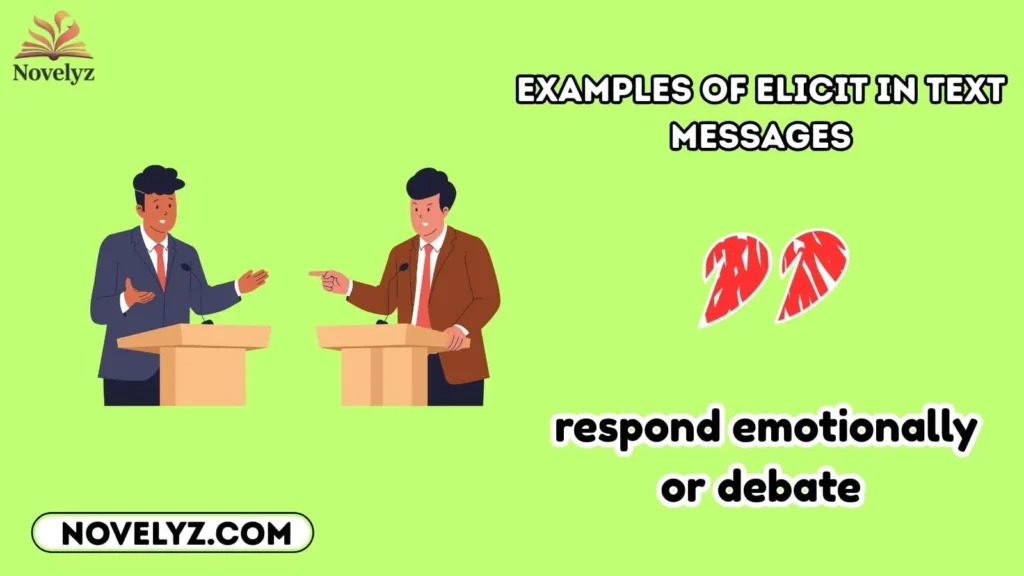
“That post about gaming microtransactions really elicited some strong reactions.”
Meaning:
The post caused people to respond emotionally or debate.
Example 2
Friend 2:
“I asked him about the project and it elicited a surprisingly honest answer.”
Meaning:
The question caused him to reveal something honest.
Example 3
Forum comment:
“That joke always elicits laughter from the audience.”
Meaning:
The joke makes people laugh.
Example 4
Reddit discussion:
“The trailer elicited mixed reactions from fans.”
Meaning:
Fans responded in different ways.
Example 5
Discord conversation:
“That question definitely elicited some interesting opinions.”
Meaning:
The question made people share their thoughts.
Common Mistakes & Misunderstandings
Many people misunderstand elicit meaning because the word looks similar to others.
1. Confusing “Elicit” With “Illicit”
These two words are often mixed up.
Elicit
- Means to draw out or cause a response
Example:
“The teacher asked a question to elicit discussion.”
Illicit
- Means illegal or forbidden
Example:
“He was involved in illicit activities.”
They sound similar but mean completely different things.
2. Using It When “Ask” Would Be Better
Some people overuse the word.
Instead of:
“I elicited his phone number.”
Better:
“I asked for his phone number.”
Elicit works best when the response happens naturally, not just because someone asked directly.
3. Thinking It’s Internet Slang
Elicit is not slang.
It’s a standard English verb used in:
- academic writing
- professional communication
- analytical discussions online
How to Respond When Someone Uses “Elicit”
If someone uses elicit in conversation, you usually don’t need to respond in a special way. Just focus on the meaning.
Safe Responses
Examples:
- “Yeah, that definitely got a reaction.”
- “It sparked a lot of opinions.”
- “People had strong responses to it.”
- “That question made everyone think.”
When to Ask for Clarification
If you’re unsure what they mean, you can ask:
- “What kind of response did it get?”
- “What reactions did people have?”
Most of the time, the context makes the meaning clear.
Is “Elicit” Still Used in 2026?
Yes. Elicit is still widely used in 2026, but mainly in thoughtful or analytical discussions, not casual texting.
Who Uses It Most
Common among:
- writers
- journalists
- students
- researchers
- Reddit and forum users
- educators
Less Common Among
- casual Snapchat texting
- quick gaming chat
- meme conversations
Gen Z users often prefer simpler phrasing like:
- “That got a reaction.”
- “That triggered a response.”
- “That sparked debate.”
But elicit remains common in educated or explanatory contexts online.
Related Words & Terms People Confuse With “Elicit”
Understanding related words helps avoid confusion.
Illicit
Means illegal or forbidden.
Example:
“Illicit substances.”
Evoke
Means to bring a feeling or memory to mind.
Example:
“The music evoked nostalgia.”
Provoke
Means to trigger a strong reaction, often anger.
Example:
“The comment provoked outrage.”
Prompt
Means to cause someone to act or respond.
Example:
“The question prompted discussion.”
FAQs:
What does “elicit” mean in simple terms?
Elicit means to draw out a response, reaction, emotion, or information from someone.
Is “elicit” the same as “ask”?
Not exactly. Asking is direct. Elicit usually means causing a response indirectly or naturally.
Is “elicit” slang?
No. It’s a standard English word commonly used in writing, journalism, and analysis.
What is an example sentence using elicit?
“Her comment elicited laughter from the group.”
Why do people confuse elicit and illicit?
They sound similar, but elicit means draw out, while illicit means illegal.
Conclusion:
Understanding elicit meaning helps you recognize when someone is describing a reaction, response, or emotion that was drawn out by something else.
Key takeaways:
- Elicit means to draw out a response or reaction.
- It’s often used in analytical or thoughtful conversations.
- It’s commonly seen in writing, journalism, and online discussions.
- It’s frequently confused with illicit, which has a completely different meaning.
Once you recognize how it’s used, the word becomes much easier to understand in context.
Language online evolves constantly, but clear words like elicit remain valuable for explaining how people respond to ideas, questions, and experiences.

I am a curious writer at Novelyz who loves exploring the true meanings behind words, phrases, and modern expressions. My goal is to explain language in a simple, clear way that feels real, relatable, and easy for everyone to understand.