If someone calls you “blunt” in a text or chat, are they complimenting you… or low-key criticizing you?
A lot of people search for blunt meaning because the word shows up everywhere now — texts, TikTok comments, Discord servers, dating apps, even gaming chats.
And the meaning isn’t always obvious, especially if English isn’t your first language or you didn’t grow up with modern internet slang.
Understanding what blunt means in chat culture matters. It can change how you read someone’s tone, how you respond, and whether a message feels honest, rude, funny, or awkward.
This guide explains the blunt meaning in slang and texting, with real examples and modern context. Updated for 2026, written for actual humans not dictionaries.
What Does “Blunt” Mean in Chat or Text?
In modern chat and slang, blunt usually means:
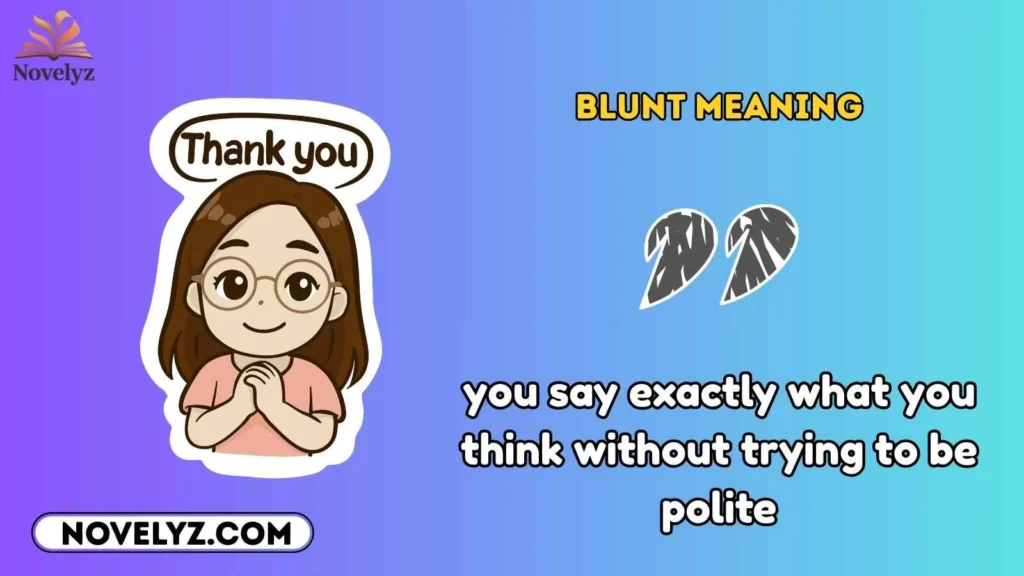
Someone who speaks very directly, without softening their words.
They say what they mean — no sugarcoating, no hints, no emotional padding.
Depending on context, blunt can mean:
- Honest
- Straightforward
- Harsh
- Rude
- Refreshingly real
Simple definition
Blunt = direct to the point, sometimes brutally honest
How the meaning evolved online
Originally, blunt just meant “not sharp.” Over time, it became a personality descriptor. Internet culture pushed it further — now it’s often used to describe communication style, especially in text where tone is hard to read.
In 2026 chat culture, being blunt is often intentional. People use it to:
- Set boundaries
- Avoid drama
- Speed up conversations
- Signal honesty over politeness
How People Use “Blunt” in Real Conversations
You’ll see blunt used across almost every platform:
Where it’s common
- Texting & DMs – friends, family, coworkers
- Instagram & TikTok comments – reacting to opinions
- Discord & gaming chats – fast, no-filter communication
- Dating apps – honesty about intentions
- Reddit & forums – direct opinions, debates
Common tones
- Casual: “I’m just being blunt.”
- Defensive: “Not trying to be rude, just blunt.”
- Appreciative: “I like how blunt you are.”
- Critical: “That was kinda blunt…”
When it feels natural
- Giving honest feedback
- Answering yes/no questions
- Setting clear boundaries
- Time-sensitive conversations
When it feels awkward
- Emotional conversations
- Sensitive topics
- New relationships
- Professional settings without context
People often use blunt as a warning label — like saying, “Heads up, I’m about to be very direct.”
Real-Life Examples of “Blunt” in Text Messages
Here’s how blunt actually shows up in real chats — and what it really means.
Example 1
“I’m gonna be blunt — I don’t think this is working.”
Meaning: They’re ending or criticizing something directly, without softening it.
Example 2
“He’s blunt but not mean.”
Meaning: He’s honest and direct, but doesn’t intend to hurt feelings.
Example 3
“That reply was blunt af.”
Meaning: The message felt harsh or emotionally cold.
Example 4
“Can you be blunt with me?”
Meaning: Don’t sugarcoat it. Tell the truth.
Example 5
“I respect how blunt you are.”
Meaning: Directness is seen as confidence and honesty.
Context changes everything. The same word can signal respect or criticism depending on tone.
Common Mistakes & Misunderstandings
A lot of confusion around blunt meaning comes from these mistakes:
1. Assuming blunt = rude
Not always. Bluntness is about delivery, not intention.
2. Using it as an excuse
Saying “I’m just blunt” doesn’t excuse being disrespectful. People notice the difference.
3. Cultural misunderstandings
Some cultures value directness. Others value politeness. This can cause misreads.
4. Generational gaps
Gen Z often accepts blunt communication. Older generations may see it as aggressive.
5. Confusing literal meanings
In slang context, blunt does not mean a cigar or weed — unless the conversation clearly points that way.
How to Respond When Someone Sends You “Blunt”
If someone says something blunt to you, here are safe ways to respond.
You appreciate it
- “I appreciate the honesty.”
- “Thanks for being blunt.”
- “That actually helps.”
It feels harsh
- “I get your point, but that came off strong.”
- “Can you explain a bit more?”
- “I wasn’t expecting that tone.”
You’re unsure
- “Just to clarify, do you mean…?”
- “Are you being serious or joking?”
When not to mirror it back
- Emotional conversations
- Conflicts already heated
- Professional chats
Bluntness works best with consent or trust.
Is “Blunt” Still Used in 2026?
Yes — very much.
Current usage trends
- Gen Z: Uses it casually, often positively
- Millennials: Uses it cautiously, context-aware
- Dating apps: Extremely common
- Work chats: Used, but softened
It hasn’t faded — it’s normalized. People now value clarity, especially in fast digital communication.
Related Slangs & Abbreviations
If you’re learning chat language, these often show up near blunt:
- FR – For real (serious honesty)
- No cap – Not lying
- Real talk – Serious conversation
- Straight up – Honest, direct
- Low-key / High-key – Softened vs strong opinions
- Say it louder – Agreement with blunt honesty
Understanding these together helps you read tone better.
FAQs:
What does “blunt” mean in text messages?
It means the person is being very direct and honest, sometimes without softening their words.
Is being blunt a bad thing?
Not always. It can be appreciated or criticized depending on tone, context, and relationship.
Does blunt mean rude?
Not necessarily. Rude is about disrespect. Blunt is about directness.
Why do people say “I’m being blunt”?
To warn you they’re about to speak honestly and without sugarcoating.
Is “blunt” slang or normal English?
It’s standard English, but heavily used in modern slang and chat culture.
Conclusion:
The blunt meaning in chat is simple once you see it in action. It’s about honesty, speed, and clarity — sometimes at the cost of softness.
If you’re ever confused, remember:
- Blunt ≠ mean
- Context matters
- Tone changes everything
Once you understand it, reading modern texts and comments gets a lot easier — and less stressful.
What’s your favorite chat abbreviation or slang word that confused you at first? Drop it in the comments.

I am a curious writer at Novelyz who loves exploring the true meanings behind words, phrases, and modern expressions. My goal is to explain language in a simple, clear way that feels real, relatable, and easy for everyone to understand.