If you’ve seen someone type “apres” in a text, caption, or comment and felt confused, you’re not alone.
People search for apres meaning because it looks familiar, sounds fancy, and clearly isn’t traditional English slang—but it keeps showing up online.
In modern chat culture, apres has taken on a casual, shorthand life of its own. Understanding it helps you read social posts correctly, follow conversations without guessing, and avoid awkward misunderstandings.
This guide breaks it down clearly, simply, and the way real people actually use it today.
Updated for 2026, with real-world context—not dictionary fluff.
What Does “Après” Mean in Chat or Text?
In chat, “apres” usually means “after” or “afterwards.”
It comes from the French word “après”, which literally means after. Online, the accent is almost always dropped, so you’ll see apres, not après.
The core meaning (simple version)
- Apres = after
- Used to describe something that happens later, post-event, or following a change
Where it comes from
- French language influence
- Popularized globally through:
- Fashion and beauty (“before & after” content)
- Lifestyle and travel posts
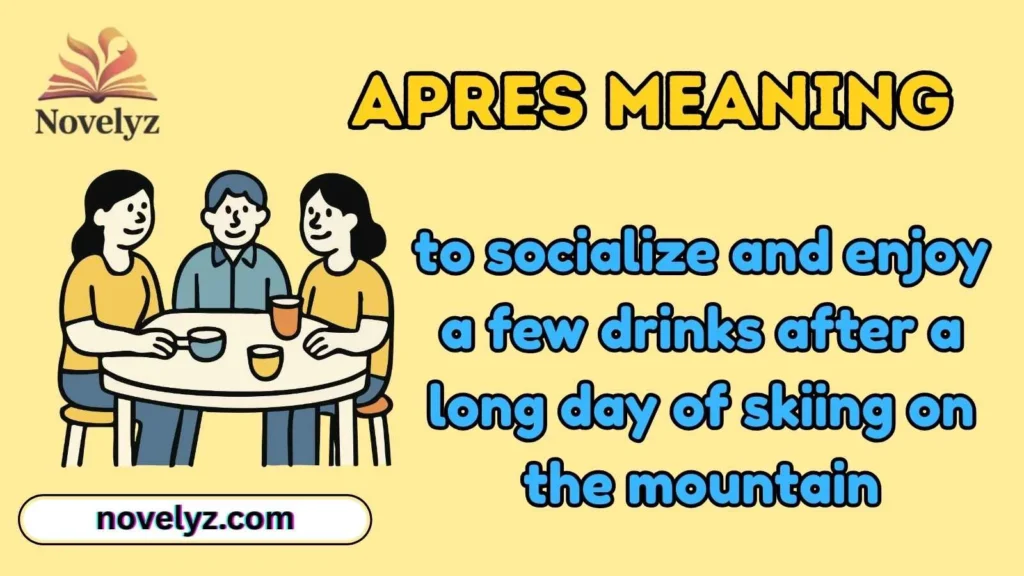
- The phrase après-ski (socializing after skiing)
How the meaning evolved online
Originally formal or lifestyle-focused, apres is now:
- Casual
- Short
- Visual-friendly
- Used as a label or caption rather than a full sentence
It’s not “slang” in the meme sense—but it functions like slang in modern digital language.
How People Use “Après” in Real Conversations
You’ll see apres most often where visuals or timelines matter.
Common platforms
- Texting: casual shorthand
- Instagram: captions, reels, carousels
- Snapchat: story labels
- TikTok: transformation videos
- Discord & forums: niche lifestyle chats
- Dating apps: playful or aesthetic descriptions
How it feels when used correctly
- Casual
- Slightly aesthetic or polished
- Neutral to playful
- Sometimes ironic
When it feels natural
- Before/after comparisons
- Post-event updates
- Glow-ups or changes
- Travel or lifestyle posts
When it feels awkward
- In formal writing
- In serious conversations
- With people unfamiliar with French-influenced terms
This is a soft-flex word. It sounds stylish, but only works in relaxed contexts.
Real-Life Examples of “Après” in Text Messages
Example 1
“That was me apres the haircut”
What it means:
This is how I looked after the haircut.
Example 2
“Apres work drinks tonight?”
What it means:
Drinks after work?
Example 3
“Pre vs apres vacation energy”
What it means:
Comparing mood or appearance before and after a vacation.
Example 4
“Apres gym vibes are undefeated”
What it means:
How someone feels or looks after going to the gym.
Example 5
“This is my skin apres 30 days”
What it means:
Skin results after 30 days of a routine.
Context is everything. Apres isn’t about time alone—it’s about change.
Common Mistakes & Misunderstandings
1. Thinking it’s an acronym
Apres is not an abbreviation or initials.
It’s a borrowed word.
2. Confusing it with ASL or coded slang
Some people assume it’s hidden slang or a secret meaning. It’s not.
3. Using it in serious conversations
“Apres the argument” can sound flippant or tone-deaf.
4. Overusing it to sound trendy
Using apres too often can feel forced, especially in plain texting.
5. Misreading the tone
In some contexts, apres can sound ironic or slightly sarcastic.
How to Respond When Someone Sends You “Après”
If someone uses apres, you don’t need to mirror it unless it feels natural.
Safe responses for beginners
- “After work?”
- “So after that?”
- “How was it afterward?”
When it’s okay to use it back
- Casual chats
- Social media comments
- Lifestyle conversations
When to ask for clarification
If the timeline is unclear:
“After what?”
That’s completely normal.
Is “Après” Still Used in 2026?
Yes—but selectively.
Who uses it most
- Millennials
- Gen Z in aesthetic or lifestyle spaces
- Fashion, beauty, fitness, and travel communities
Where it’s strongest now
- Instagram captions
- TikTok transformations
- Before/after content
- Wellness and glow-up culture
Trend status
- Not mainstream slang
- Not dying
- Stable niche usage
Apres has staying power because visuals never go out of style.
Related Slangs & Abbreviations
These often appear alongside or instead of apres:
- Post- – English equivalent (“post-gym”, “post-work”)
- Aftermath – More dramatic, emotional
- Glow-up – Focus on improvement
- Before/After – Explicit comparison
- Era – Used for phases instead of time
Knowing these helps you read tone and intent more accurately.
FAQs:
What does “apres” mean in text?
It means after or afterwards, usually referring to a change or result.
Is “apres” slang or French?
It’s French in origin but used casually like slang online.
Do you need the accent (après)?
No. Online usage almost always drops the accent.
Is it okay to use “apres” in texting?
Yes, in casual conversations—but avoid formal settings.
Is “apres” Gen Z slang?
Not exactly. It’s used by both Millennials and Gen Z, mostly in lifestyle contexts.
Final Thoughts:
If apres confused you before, you’re good now.
It simply means after, with a slightly stylish, visual-first vibe. You don’t need to use it to sound modern—but understanding it helps you follow conversations without second-guessing yourself.
Modern chat language borrows from everywhere. Knowing the meaning gives you confidence—and that’s the real flex.
What’s your favorite chat abbreviation that confused you at first? Drop it in the comments.

I am a curious writer at Novelyz who loves exploring the true meanings behind words, phrases, and modern expressions. My goal is to explain language in a simple, clear way that feels real, relatable, and easy for everyone to understand.